Local SEO is all about increasing visibility in local search results, and the key to proving that visibility is effective local SEO reporting.
Whether you are an agency delivering monthly updates to clients or an in-house marketer presenting regularly to internal stakeholders, robust local SEO reports ensure your efforts are measurable and make progress easy to see.
Below, we will cover what a strong local SEO report should include, the tools that make reporting easier, and how to deliver insights that drive strategy instead of just summarizing data.
What Local SEO Reporting Should Include
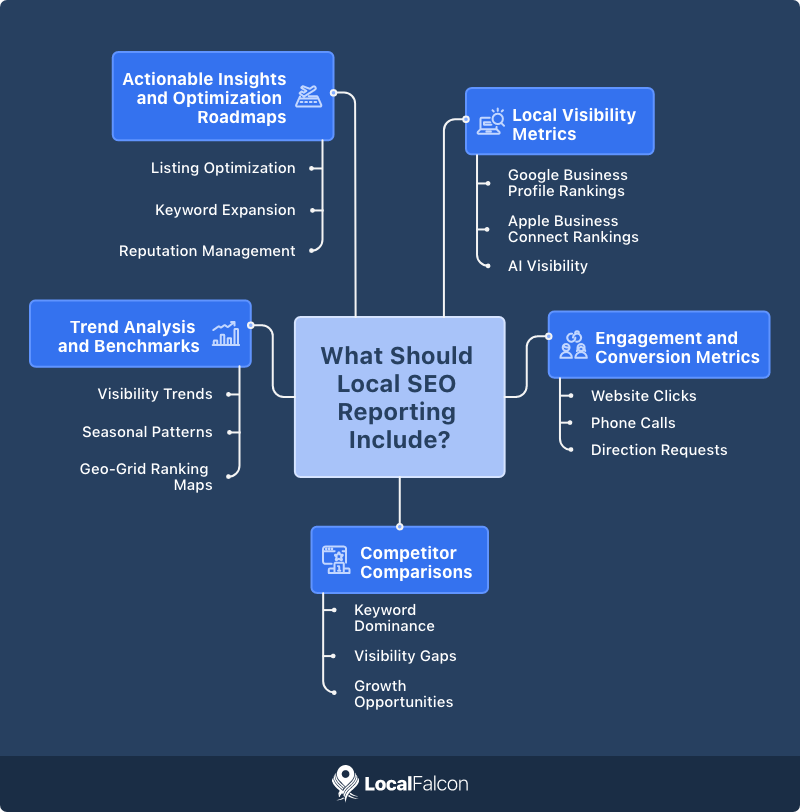
A well-rounded local SEO report provides a clear picture of how a business appears in local search, how people are engaging with listings and business websites, and where there is room for improvement. Here are the essentials every local SEO report should cover.
1. Local Visibility Metrics
At the heart of any local SEO strategy is visibility: how often and where your business appears in search results.
Google Business Profile (GBP) Rankings
Tracking rankings in Google's local search results and on Google Maps is essential. GBP visibility directly correlates with calls, clicks, and foot traffic.
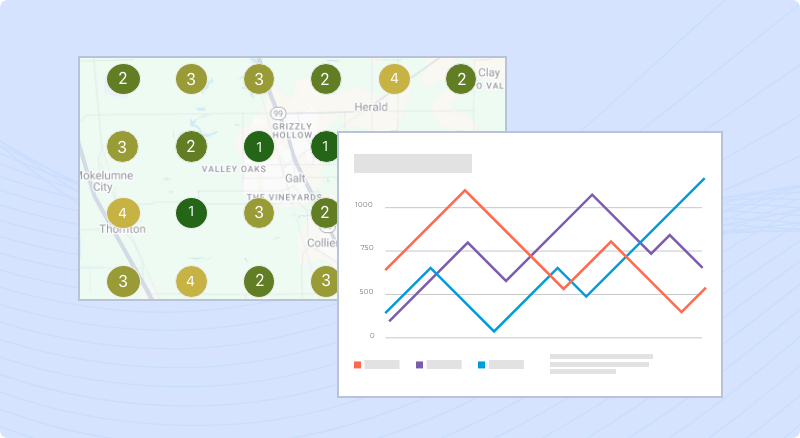
Look beyond just overall keyword rankings and focus on geo-specific visibility using geo-grid reporting, which shows where your business ranks across different points in your service area. This helps uncover hidden visibility gaps competitors may be taking advantage of.
Apple Business Connect Rankings
Apple Maps has become an increasingly important local discovery platform among iOS users. Reporting on your Apple Business Connect visibility ensures you are not missing a segment of iPhone users who rely on Apple's built-in Maps app for directions and recommendations.
AI Visibility
AI-driven search is rapidly reshaping how users discover local businesses. Instead of showing traditional ranked results, AI platforms such as Google AI Overviews, AI Mode, Gemini, ChatGPT, and Grok now generate summarized recommendations.
Tracking AI visibility, or your business's Share of AI Voice (SAIV), reveals whether your brand is being surfaced in these emerging conversational search environments.
For agencies and enterprise teams, this metric is becoming a new local SEO reporting standard.
2. Engagement and Conversion Metrics
Visibility alone doesn't tell the full story. Local SEO reporting should also demonstrate how that visibility converts into measurable actions.
Google Business Profile Performance Metrics
Pull from your GBP dashboard to show how users are engaging with your listing. Key metrics to include:
- Website clicks: Indicate digital interest and site traffic driven by local search
- Phone calls: Represent direct customer intent
- Direction requests: Show real-world engagement and foot traffic potential
These metrics connect ranking performance to tangible business outcomes. Local Falcon includes these data points directly in its reporting dashboard (within Falcon Guard Reports), saving time while presenting a fuller picture of performance.
3. Competitor Comparisons
A strong local SEO report should compare a business's visibility to top competitors in the target market, adding depth and strategy to the story you're telling.
Competitor comparisons can reveal:
- Who is dominating for the most important local keywords
- Where your competitors have stronger local visibility
- Which nearby areas present the best opportunities for growth
Including these insights not only highlights performance but also positions your team as proactive and data-driven.
4. Trend Analysis and Benchmarks
One month of rankings or engagement metrics doesn't tell you much on its own. Effective local SEO reporting shows trends over time, highlighting progress, momentum, and seasonal patterns.
Line or bar graphs showing visibility trends across different locations or keywords make your reports more digestible and impactful. Visuals make it easy to identify growth, plateaus, or areas needing attention.
Geo-grid ranking maps are especially powerful here. They visualize ranking data geographically, helping you set benchmarks for local visibility and identify high-potential zones.
5. Actionable Insights and Optimization Roadmaps
Data is only useful if it leads to action. Every great local SEO report should include a short analysis of what's working, what's not, and what to do next.
Examples might include:
- Improving underperforming listings with optimized categories or fresh photos
- Expanding keyword coverage/targeting into nearby areas with weaker visibility
- Adjusting reputation management strategies to get a more steady stream of positive reviews
If you can connect metrics directly to actionable recommendations, your reports become strategic tools rather than simple status updates.
Reporting on Both Traditional and AI Search Keywords
Local search visibility is now split between traditional search and AI-driven search experiences. Your reports should reflect both.
Traditional search reporting still focuses on:
- Keyword-based rankings
- Local pack and map visibility
- Organic traffic and click-through rates
But now, AI search visibility must also be tracked in order to understand which businesses AI models recommend or reference when users ask different types of local-intent questions.
Appearing in conversational responses for AI search queries will increasingly determine which businesses get chosen by customers, so reporting on AI search keywords is an essential part of any future-proof local SEO strategy.
The Role of Visuals in Local SEO Reporting
Visuals are not just for aesthetics. They're essential for clarity. Clients and stakeholders can interpret maps, graphs, and trend lines far more easily than raw numbers.
Key visuals to include:
- Geo-grid heatmaps for visualizing ranking spread and coverage area
- Line charts and bar graphs for visibility or engagement trends over time
These visual tools transform complex data into an easy-to-understand narrative, helping you communicate results and justify strategy adjustments with confidence.
The Best Tools for Local SEO Reporting
When it comes to creating comprehensive, visual, and data-rich reports, one tool stands out for modern local SEO professionals.
Local Falcon: The All-in-One Local SEO Reporting Platform
Local Falcon brings together every key element of local SEO reporting in a single platform:
- Google Business Profile Rank Tracking including geo-grid visibility maps for pinpoint accuracy
- Apple Business Connect Rank Tracking to measure Apple Maps visibility and compare across locations
- AI Visibility Tracking to see how often your business is mentioned across AI search platforms such as Google AI Overviews, AI Mode, Gemini, ChatGPT, and Grok
- Competitor Reports and Analysis to compare your visibility and AI presence to others in your market
- Trend Reports and Visuals to generate shareable visuals showing progress over time
- GBP Performance Metrics to access engagement data (clicks, calls, directions) alongside your other local SEO reporting data
For agencies, these features streamline client reporting and elevate the value of your services. And for in-house teams, they simplify how you communicate results and justify ongoing investment in local SEO.
You can complement this with Google's native GBP Performance Metrics dashboard to explore additional insights into user engagement, but Local Falcon's reporting consolidates the most essential metrics into one place for easier storytelling and faster updates.
Building Local SEO Reports That Drive Real Results
The best local SEO reports don't just summarize activity. They drive action. Here's what separates a good report from a great one:
- Clarity: Use plain language, visuals, and concise summaries to explain what the data means.
- Relevance: Focus on metrics that align with business goals and show measurable progress, such as Share of Local Voice (SoLV) and Share of AI Voice, as well as GBP Performance Metrics.
- Comparability: Include competitor and trend data to contextualize performance.
- Actionability: End each report with optimization recommendations or next steps.
With these elements in place, your reports will become an indispensable part of your local SEO workflow rather than just another generic deliverable.
Final Thoughts
Local SEO reporting is evolving quickly. As search experiences expand beyond Google into alternative local search platforms, from Apple Maps to AI-powered search platforms, marketers need tools and frameworks that reflect the full visibility picture.
Combining rankings, engagement metrics, competitor insights, and AI visibility data, and presenting them in a clear, visual, and actionable format, will both prove the impact of your local SEO work and help uncover new opportunities to grow visibility and market share.
Local Falcon makes this process easier than ever, giving agencies and in-house marketers alike a unified view of their local visibility across traditional and AI search and turning local SEO reports into true strategic assets.
FAQs About Local SEO Reporting
What should be included in a local SEO report?
A complete local SEO report should include Google Business Profile rankings, Apple Business Connect rankings, AI visibility intelligence, key engagement metrics such as clicks and calls, competitor comparisons, and visual performance trends. Actionable recommendations should also be included to guide next steps.
How often should you create local SEO reports?
Most agencies and in-house teams generate reports bi-weekly or monthly to track progress, identify trends, and adjust strategy. For high-growth or highly competitive industries, weekly or bi-weekly reports are best for closer monitoring.
Why is AI visibility important for local SEO reporting?
AI visibility shows whether your business is being recommended or mentioned by AI-driven platforms like ChatGPT, Gemini, and Grok. As more consumers use AI search, tracking your Share of AI Voice is essential to maintaining local visibility.
What is the best tool for local SEO reporting?
Local Falcon is one of the best all-in-one tools for local SEO reporting. It tracks Google Search/Maps and Apple Maps visibility, AI search presence, competitor performance, and key GBP engagement metrics, while offering prebuilt visuals that simplify reporting.
How can visuals improve local SEO reporting?
Visuals such as geo-grids, line graphs, and bar charts make it easier to understand performance at a glance. They also help clients and stakeholders grasp trends, identify problem areas, and see progress over time.