
It's no secret that AI frequently cites social platforms like Reddit and Facebook, but what about social video sharing platform YouTube? The answer might surprise you.
One recent study found that YouTube was the second-most cited platform across the six most popular AI search platforms, with a citation share of 1.8%. The only platform cited more often by AI was, and this probably won't surprise you, Reddit, which accounted for 2.6% of all AI citations analyzed in the study.
An even more recent study found that YouTube appeared as a cited source in 16% of LLM answers, compared with 10% for Reddit, indicating that YouTube may have surpassed Reddit as the social source most frequently cited in AI-generated search results.
With how prone AI search behavior is to shifting, whether or not YouTube gets more citations than Reddit on AI search isn't really the point. What does matter is that a platform many brands may have historically paid little attention to, or even ignored altogether, now has major potential to contribute to their AI visibility.
Why Does AI Cite YouTube Videos?
So how did a platform that started as a place to share grainy home videos become one of AI's most trusted reference sources? The answer comes down to structure.
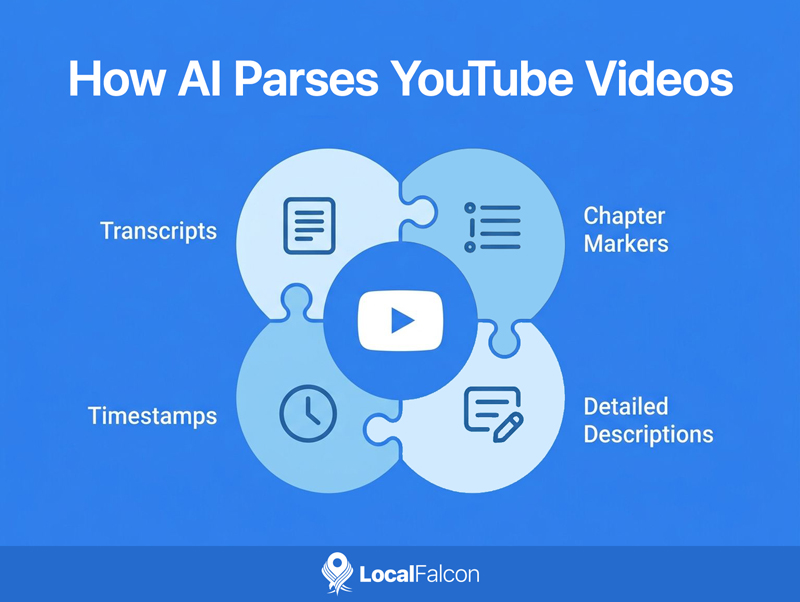
A well-produced YouTube video comes bundled with several features that make it easy for AI to parse and reference. Transcripts convert spoken content into text that AI can analyze. Chapter markers and timestamps transform a single video into multiple discrete, citable segments. Detailed descriptions act as metadata that help AI systems understand what a video is actually about before they even process the content itself. Taken together, these elements make YouTube look less like a social platform to AI and more like a structured knowledge base.
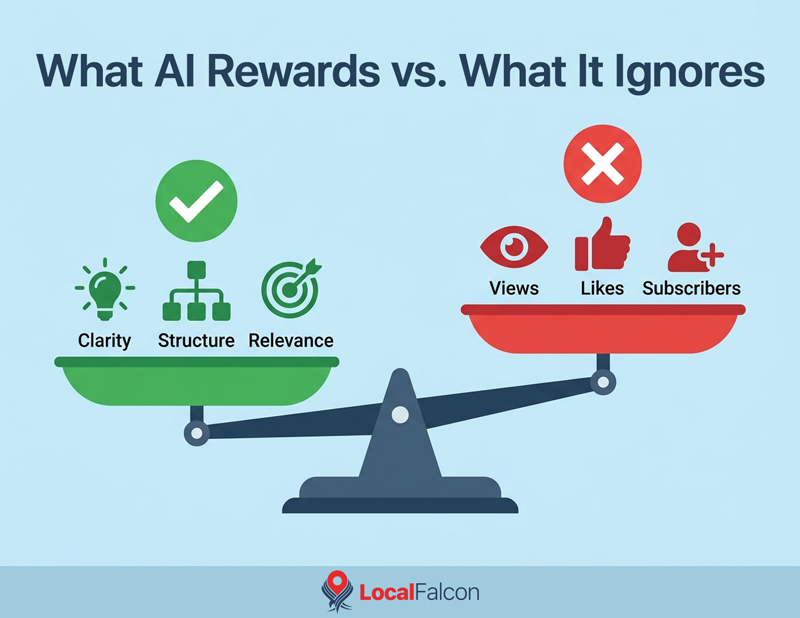
This helps explain one of the more counterintuitive findings from the research into YouTube and AI citations: popularity has almost nothing to do with whether a video gets cited. A significant share of AI-cited YouTube videos had under 1,000 views and fewer than 15 likes at the time they were cited. Channel size and subscriber count show similarly weak relationships with citation frequency. What AI systems appear to reward is clarity, structure, and relevance, not social proof.
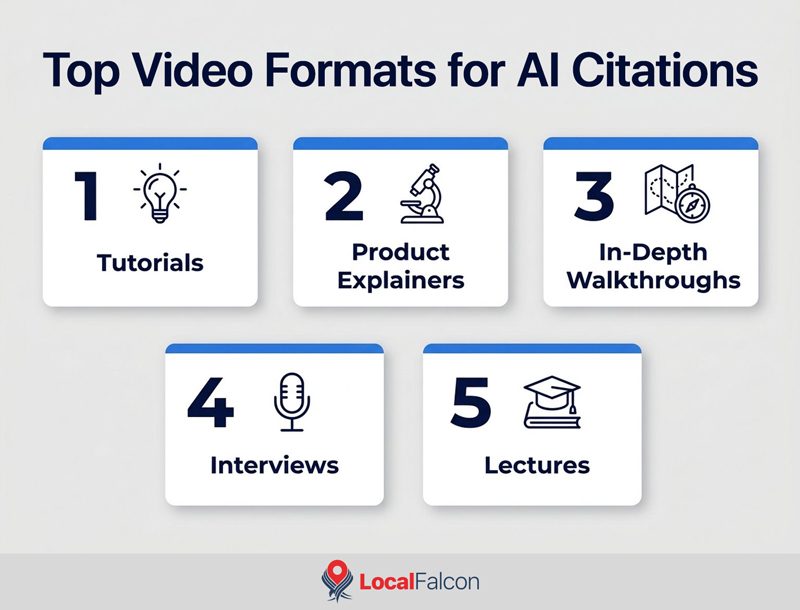
The type of content matters enormously too. The overwhelming majority of AI citations point to long-form videos including tutorials, product explainers, in-depth walkthroughs, interviews, and lectures, rather than short-form content. This runs counter to where many brands have focused their video investment in recent years, chasing reach on YouTube Shorts, TikTok, and Instagram Reels. For AI visibility purposes, a thorough 10-minute explainer will consistently outperform a snappy 60-second clip.
Recency also plays a modest but real role in earning AI visibility through YouTube. Newer videos tend to get cited slightly more often, a pattern that naturally becomes especially pronounced when users ask AI tools about current trends, recent product releases, or anything with a year attached to the query. For brands operating in fast-moving categories, keeping video content current is not just good practice but a meaningful AI visibility strategy.
Finally, not all AI platforms cite YouTube equally. Perplexity and Google AI Overviews together account for roughly three-quarters of all YouTube citations observed in the research, while tools like Gemini and Microsoft Copilot cite it far less frequently.
Does AI Cite Any Other Video Sharing Platforms?
According to Search Engine Land, generative AI search platforms overwhelmingly favor YouTube when it comes to video-based citations. It's cited 200 times more in AI-generated search results than any other video platform, with top competitors like TikTok and Vimeo barely appearing in citations by comparison.
So, if your brand is creating video content somewhere other than YouTube, it may be time to reevaluate your strategy, at least in terms of AI visibility optimization.
PR teams that have traditionally focused on earning text-based media placements may also want to take note. With AI search platforms now treating long-form YouTube videos as authoritative sources on par with traditional publications, earning structured video placements deserves a place in any modern digital PR strategy.
YouTube and AI Visibility: What It All Means
The key takeaway here is that YouTube is no longer just a brand awareness or customer engagement platform. It's a direct path to stronger AI search visibility.
What makes this worth paying attention to is that the qualities AI rewards in YouTube content have nothing to do with how most brands currently measure video success. Views, likes, subscriber counts, none of those appear to matter for YouTube AI citations. Instead, much like text-based content, structure and depth matter.
A clearly organized, well-described 10-minute tutorial from a channel with 500 subscribers can outperform a polished brand video with millions of views on AI search if it gives AI something concrete to extract and reference.
That also means the barrier to entry is lower than it might seem. Brands don't need a massive YouTube presence to earn AI visibility through the platform. They need the right kind of content, produced with the right structure.
The other thing worth noting is that most brands have spent the last few years optimizing for short-form video. That strategy makes sense for reach and engagement on social platforms, but it doesn't earn you AI citations. Long-form content is what gets referenced. If your video strategy is built entirely around Shorts, Reels, and TikToks, you may be missing out on a share of AI search visibility.
In other words, it's time for brands and agencies to start recognizing YouTube as part of AI search strategy, not just social media strategy. The brands showing up in AI-generated answers aren't always the most well-known or popular according to traditional social media metrics. They're often the ones whose video content happens to be genuinely useful and structured in a way AI can easily use.
FAQs on AI and YouTube Citations
Has YouTube overtaken Reddit as the go-to citation source on AI search platforms?
It may have. Some recent data suggests YouTube has pulled ahead, with one study finding YouTube appeared as a cited source in 16% of LLM answers compared to 10% for Reddit. That said, citation patterns shift frequently across AI platforms, and the gap between the two can vary significantly depending on which AI tool you're looking at.
Which AI platforms cite YouTube most often?
Perplexity and Google AI Overviews are by far the biggest YouTube citers, together accounting for roughly three-quarters of all YouTube citations observed in recent research. ChatGPT cites YouTube too, but at a much lower rate. Gemini and Microsoft Copilot trail significantly behind.
Does video popularity affect how often AI cites it?
Not in any meaningful way. Research has found that a large share of AI-cited YouTube videos had under 1,000 views and fewer than 15 likes at the time they were cited. AI systems don't appear to use engagement metrics as a signal for citation worthiness. Relevance and structure matter far more than whether a video has ever gone viral.
What types of YouTube videos are most likely to be cited by AI?
Long-form educational content consistently dominates AI citations, including tutorials, product explainers, walkthroughs, and interviews. Videos with clear chapter markers and timestamps, detailed descriptions, and regularly updated information on evolving topics also tend to perform well. Short-form content rarely appears in AI citations.
Does my brand need a large YouTube presence to show up in AI search results?
No. Channel size and subscriber count have little measurable impact on whether a video gets cited by AI. A single well-structured video on a relevant topic can earn AI citations regardless of how large or established your channel is.
How can I tell if AI is citing my YouTube content?
Manually checking every major AI platform for mentions of your content isn't realistic. Tools like Local Falcon can help by tracking where and how your brand appears across AI search platforms, including citation intelligence, so you can see whether your YouTube content is being referenced and identify gaps in your visibility.