
Wearing a black hat might sound elegant, but when you wear a black hat in SEO, you're up to no good.
While most businesses and SEO professionals keep their strategies on the up and up, there are, unfortunately, those who employ unethical SEO practices to unfairly inflate their own performance or hurt that of their competitors.
When it comes to local SEO, it's especially important to understand what to watch out for to avoid black hat SEO attacks and protect your rankings, helping maintain the integrity of the local search playing field in your area.
This guide focuses on identifying and stopping black hat SEO attacks before they have a chance to harm your local search performance.
What Is Black Hat SEO?
Understanding what qualifies as black hat SEO helps you recognize when competitors are using unethical tactics against your business.
Black hat SEO refers to unethical SEO practices designed to manipulate search engine rankings, often at the expense of user experience and adherence to search engine guidelines. These tactics frequently prioritize short-term gains over sustainable growth and can even lead to penalties or bans from search engines when discovered.
Unlike white hat SEO (i.e., regular SEO), which focuses on improving user experience and adhering to search engine guidelines, black hat SEO exploits loopholes in algorithms to gain unfair advantages.
Black hat SEO attacks are also often intended to hurt competitors' search rankings, especially in local SEO where everyone is fighting for a coveted position in Google's local pack.
In the context of local SEO, businesses employing black hat SEO often target the Google Business Profiles (GBPs) of their competition. This can result in misinformation, lost customer trust, and unfair advantages for competitors.
Black Hat SEO Vs White Hat SEO
Understanding the distinction between black hat and white hat SEO is not only important for protecting your rankings, but also so you can recognize when a local SEO professional or agency may be offering you unethical services that could hurt your local search performance in the long run.
Although black hat SEO and white hat SEO can both involve similar SEO tactics, such as including keywords in content and building backlinks, there are key differences in their approaches to these.
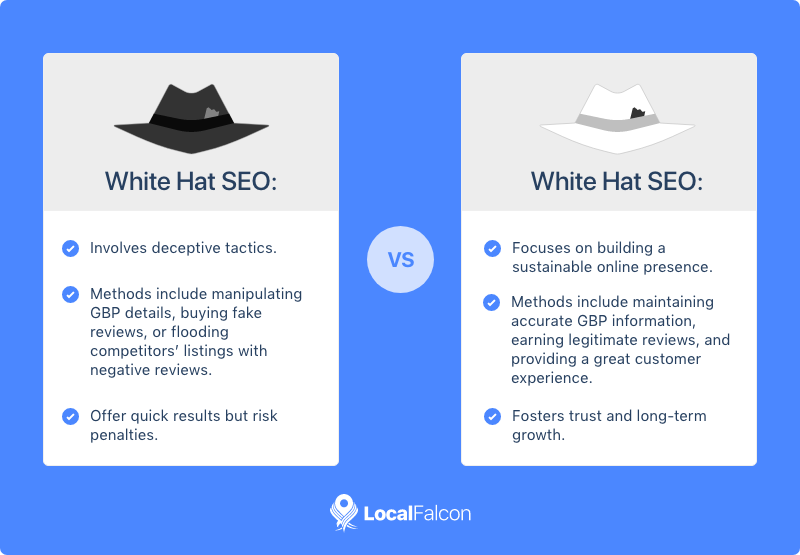
Black Hat SEO:
- Involves deceptive tactics such as keyword stuffing, cloaking, link farming, and spammy backlinks.
- In local SEO, common methods include manipulating GBP details, buying fake reviews, or flooding competitors' listings with negative reviews.
- These methods can offer quick results but risk penalties that can harm a business's reputation and rankings.
White Hat SEO:
- Focuses on building a sustainable online presence through ethical practices like high-quality content, proper keyword optimization, and genuine customer engagement.
- In local SEO, it involves maintaining accurate GBP information, earning legitimate reviews, and providing a great customer experience.
- This approach fosters trust and long-term growth, adhering to search engine guidelines.
Common Black Hat SEO Attacks Used Against Local Businesses
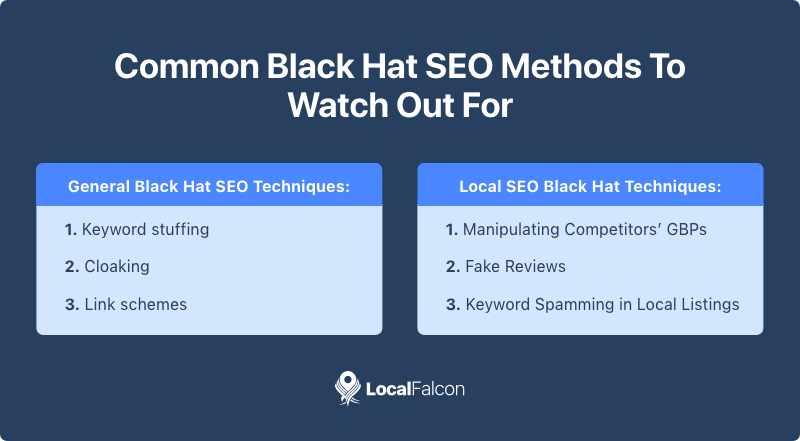
Warning Signs of Black Hat SEO Activity:
- Keyword stuffing: Overloading web pages with keywords in unnatural ways to influence rankings.
- Cloaking: Displaying different content to search engines and users, tricking algorithms into ranking irrelevant content.
- Link schemes: Participating in link farms or buying backlinks to artificially boost domain authority.
Black Hat SEO Attacks That Target Google Business Profiles:
- Manipulating Competitors' GBPs: Using "Suggested edits" to alter crucial GBP details, such as website URL, hours, business name, or address, to mislead potential customers, hurt rankings, and disrupt operations.
- Fake Reviews: Paying for fake positive reviews to inflate a GBP's credibility and boost its performance or fake negative reviews to tarnish a competitor's reputation, misleading customers and skewing rankings.
- Keyword Spamming in Local Listings: Adding keywords that aren't part of the business name to GBP listing titles to rank higher in local search results.
How To Avoid Black Hat SEO Attacks and Protect Your Local Rankings
Combating black hat SEO requires constant vigilance, proactive monitoring, and the use of specialized tools to detect and address unethical practices. Here are a few key strategies:
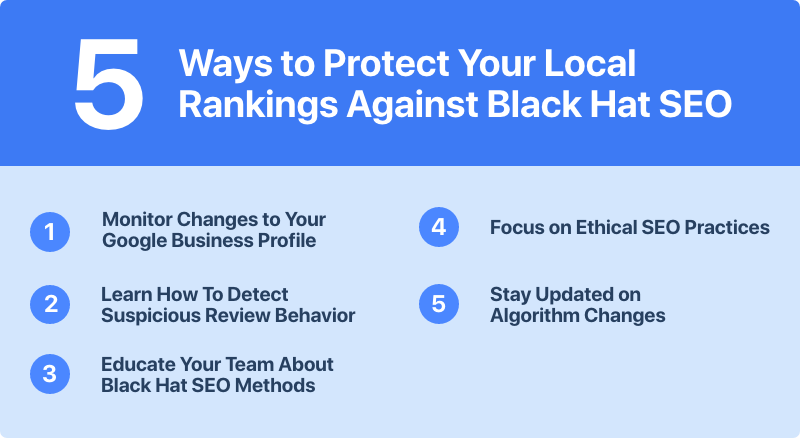
Monitor Changes to Your Google Business Profile
Use a Google Business Profile change monitor, like Falcon Guard, to track any changes to your GBP, such as unauthorized edits to your hours or business name.
Alerts from Falcon Guard allow you to quickly reject harmful suggested edits and maintain the accuracy of your profile to preserve your rankings and keep driving nearby customers to your business.
In addition to safeguarding your GBP against unwanted suggested edits, Falcon Guard also keeps a record of all changes, so you can correlate trends in your local search performance with authorized changes, too.
Learn How To Detect Suspicious Review Behavior
Local Falcon's AI Reviews Analysis tool and Falcon Agent can provide you with powerful AI-generated analysis of customer review patterns.
These tools can identify anomalies, such as sudden spikes in positive reviews on a competitor's Google Business Profile or clusters of suspicious negative reviews targeting your business.
Conducting further analysis, building a case with AI-backed evidence, and reporting these incidents to Google can help get fraudulent reviews removed to maintain the integrity of your GBP and the overall local search market.
Educate Your Team About Avoiding Black Hat SEO Attacks
Ensure your team is aware of the types of black hat SEO attacks commonly found in local SEO, such as fake review schemes or GBP listing information manipulation. This knowledge helps them recognize and report unethical practices before they can do permanent damage.
If you hire a local SEO agency to work with, make sure they're on top of detecting and avoiding black hat SEO attacks, too.
Focus on Ethical SEO Practices
While seeing competitors engaged in unethical black hat SEO can be disheartening and frustrating, it's important to keep the focus on implementing your own ethical SEO practices. The stronger your own local SEO strategy is, the less negative impact competitors' black hat methods will have.
For example, maintaining a well-optimized GBP (and making sure to watch out for unwanted suggested edits that could compromise it) and encouraging authentic reviews from satisfied customers can offset the negative effects of fake reviews, while you take the appropriate action to try and get them removed.
Whatever you do, don't ever try to combat competitors' black hat SEO with the same tactics. That's like fighting fire with fire; you're eventually going to get burned, either with ranking penalties or even a permanent Google Business Profile suspension.
Stay Updated on Algorithm Changes
Black hat SEO tactics evolve as search engine algorithms change. Keeping up-to-date on the latest algorithm updates and trends helps ensure you can spot and avoid new black hat SEO attacks.
For example, keyword stuffing is not as common as it once was, as Google caught on and made algorithm updates to counteract it. On the other hand, fake reviews are all the rage right now, since they're such an important ranking factor for local search and it can often be hard to prove that they're fake in order to get them removed.
Quick Ways To Reduce Your Risk of Black Hat SEO Attacks:
- Lock down GBP ownership and permissions
- Monitor suggested edits daily
- Build a steady stream of legitimate reviews
- Track competitor naming and category changes
- Use automated alerts for profile changes
Frequently Asked Questions About Avoiding Black Hat SEO Attacks
Can competitors use black hat SEO against my local business?
Yes. In local SEO, competitors may use unethical tactics like fake reviews, misleading suggested edits, or keyword-stuffed business names to manipulate Google Business Profiles and gain an unfair advantage.
How can I tell if my local rankings are being affected by black hat SEO attacks?
Sudden ranking drops, unexplained changes to your Google Business Profile, or unusual review activity can all be signs of black hat SEO attacks. Monitoring profile changes and review patterns helps identify issues early.
What should I do if someone is manipulating my Google Business Profile?
Review and reject unauthorized edits immediately, document suspicious activity, and report violations through Google's support channels. Ongoing monitoring tools like Falcon Guard can help catch changes before they cause ranking damage.
Are fake reviews considered black hat SEO?
Yes. Fake reviews, whether positive or negative, violate Google's guidelines and are a common black hat SEO tactic in local search. They can mislead customers and unfairly impact local rankings.
Can ethical local SEO reduce the impact of black hat SEO attacks?
Strong, ethical local SEO practices like accurate business information, consistent review generation, and active profile management can help minimize the impact of black hat SEO attacks over time.
Conclusion
Black hat SEO attacks pose a significant threat to local businesses striving for fair competition in local search rankings.
It's important for businesses and the local SEOs they work with to understand what unethical local SEO tactics can look like and implement practices and tools to detect and fight back against black hat SEO.
Taking these steps will proactively protect your rankings and maintain the trust of search engines and nearby customers alike.