
Writing a search-engine-optimized press release can provide many benefits for local SEO, from building valuable, high-authority backlinks to directly influencing what AI says about your business. And the more SEO-friendly your press releases are themselves, the more likely people are to come across them in the SERPs, ultimately helping drive traffic to your site when they click through from a link in the release.
Of course, your top priority should be making your press releases newsworthy and authoritative, as low-quality, keyword-stuffed releases can be counterproductive. However, there are some press release SEO best practices you can follow to improve their performance and impact on local SEO.
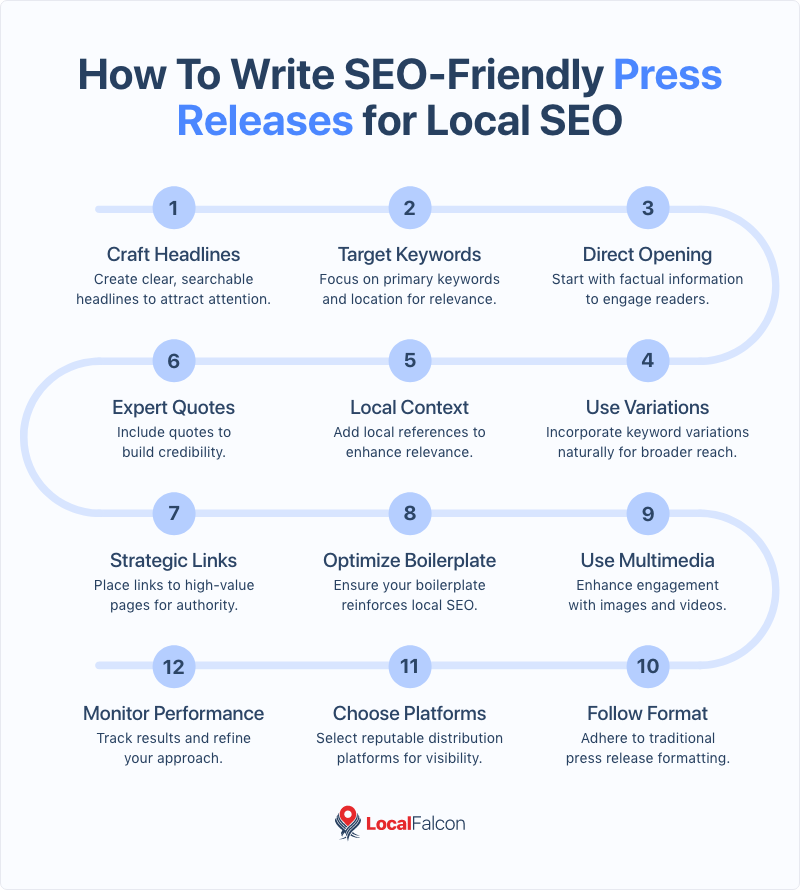
How To Write SEO-Friendly Press Releases for Local SEO
1. Craft Clear, Searchable Headlines
The headline is the single most important element of an optimized press release. It shapes how the release appears in search, influences click behavior, and guides how news sites categorize the content.
A local SEO-friendly press release headline should be specific and informative, not vague or overly promotional. Keep it concise, avoid sensational phrasing, and be intentional with your keyword placement. If your target keyword fits naturally, include it. If not, prioritize readability and context, since clarity usually produces better engagement.
Including your city or service area in the headline can help the release rank for local queries. For example, a headline about a new service location should name the city directly. Press releases often appear in Google News and Top Stories when they meet quality signals, and location-specific keywords can significantly increase visibility in those areas.
2. Target a Primary Keyword and a Location
A search-engine-optimized press release is most effective when it has one main keyword that guides the structure. This keeps the content focused and prevents dilution. Think in terms of how people actually search. If your announcement is local, align the keyword accordingly.
Try to place your main keyword in at least three critical areas: the headline, the subheading, and the first paragraph. These are the sections search engines use most heavily to determine what the release is about. Include your city or region the same way when it fits the announcement. The goal is to create a very clear topical and geographic signal without forcing anything.
3. Keep the Opening Paragraph Factual and Direct
The opening paragraph should follow the traditional press release structure. State the who, what, where, when, and why without fluff. This helps readers quickly understand the announcement, and it also helps search engines and AI pull accurate details.
Avoid long-winded introductions or abstract explanations. A strong opening paragraph also increases the chances that journalists or bloggers will use your release as a source, which often leads to natural, high-quality backlinks. These backlinks are a major benefit of SEO friendly press releases, so clarity in the introduction pays off.
4. Use Keyword Variations Naturally Throughout the Body
A well optimized press release uses related terms to reinforce its topic. Keyword variations help clarify context, and they also make the release more likely to appear for longer-tail queries, including conversational, AI-style search queries. This is especially helpful for local businesses working to expand their local visibility in geographic areas where competition is strong.
However, you should never sacrifice the actual news for the sake of keywords. If a variation feels forced, leave it out. The most effective releases maintain a natural narrative while still reinforcing important signals.
Pro Tip: You can use Local Falcon's free Local Keyword Tool to discover unique, locally relevant keyword variations for both traditional and AI search.

5. Strengthen Relevance With Local Context
Local context plays a major role in whether a press release will support your local SEO goals. When it's relevant to the story, reference specific neighborhoods, service areas, community partners, nearby landmarks, local events, or regional needs. These references help search engines understand the geographic focus of your announcement and can help the release rank for more localized queries.
For example, if you're opening a new storefront, be specific about the street, the district, or the local demand for the new location. If you're announcing a community initiative, name the organizations involved and the exact area where the work takes place.
6. Add Expert Quotes That Reinforce Credibility
Strong quotes improve the authority of a press release, which is increasingly important for appearing in SERPs and for influencing AI-generated summaries.
Instead of generic statements, use quotes that provide insight, context, or a strategic viewpoint. Quotes can also incorporate keyword variations and location details in a way that feels natural, which helps reinforce relevance without appearing optimized.
For example, if your release is about a new service offering, the quoted spokesperson can explain why the service matters to a particular community or how it will address a specific local need. These details improve the substance of the release while supporting local SEO signals.
7. Link Strategically to High-Value Pages
Link placement is an essential part of SEO for press releases. Use one or two links that lead to pages that align directly with the announcement. This often includes service pages, product pages, location pages, or deeper educational content. Avoid linking solely to your homepage unless it is clearly the most useful destination.
These links help search engines understand which pages should receive authority from the press release. They also help readers find additional information if they want to take action. Do not overload your release with links. Too many links can look spammy and may reduce the chances of widespread distribution. If you're submitting your SEO-friendly press release to various outlets, be mindful of each one's submission guidelines.
8. Optimize Your Boilerplate for Local SEO
Your boilerplate section appears at the end of every press release, which gives you a consistent opportunity to reinforce topical and geographic relevance. Write a short, factual description of your business, what you offer, and who you serve locally. Use your primary city or region, include the most important terms that describe your work, and keep the tone professional.
Over time, a well optimized boilerplate can become a valuable local SEO asset because it repeats across multiple releases. This repetition helps establish clear authority signals about your business category and your geographic coverage.
9. Use Multimedia to Improve Engagement
Images, videos, and other graphics (like infographics) can boost engagement and ranking potential.
10. Follow Traditional Press Release Formatting
Even a search-engine-optimized press release must follow standard formatting. Use a dateline, keep paragraphs short, include contact information at the end, and avoid marketing language that does not contribute substance. Proper formatting helps wire services process your release more effectively, and it helps journalists quickly interpret the content.
A clean format also improves readability on mobile devices, which is especially important since many wire distribution systems are viewed on phones.
11. Choose Reputable Distribution Platforms
Where you publish your release affects its SEO value. High quality platforms provide stronger domain authority, more reliable indexing, and better visibility in Google News.
Avoid low tier distribution networks that use questionable tactics or produce thin, duplicate pages. A reputable service improves the likelihood that your optimized press release will earn real backlinks, appear in news results, and reach actual local audiences.
12. Monitor Performance and Refine Your Approach
Once your release is live, track its performance. Look at organic impressions, referral traffic, backlinks, and ranking movement for your target pages. Evaluate which keyword placements were effective and which parts of the structure produced the most engagement.
Additionally, track your local rankings and AI visibility to see how your press releases impact them. Some businesses note instant improvements in rankings and visibility after sending out a local SEO-friendly press release, while others may see a slow-and-steady boost in performance.
Over time, these insights help you fine-tune your approach and turn press releases into a consistent contributor to local SEO growth.
FAQs About Local SEO-Friendly Press Releases
How do you make a press release SEO-friendly?
Use a clear headline, focus on one primary keyword, include relevant local details, and link to a high-value page on your site. Keep the structure clean, avoid filler language, and distribute through reputable platforms so the release can earn visibility and potential backlinks.
When should local businesses write press releases for SEO?
Press releases work best when there is real news, such as new locations, services, partnerships, events, or awards. Newsworthy updates attract more media attention and create stronger SEO value.
Do press releases still help with backlinks?
Yes, when they lead to organic coverage. Wire links are usually no-follow, but journalists and local publications often link back when they use your release as a source.
Should you include keywords in a press release?
Yes, but keep it natural. Place the main keyword in the headline, subheading, and opening paragraph, then use a few variations without forcing them.
Do local citations in press releases help with SEO?
They can support local SEO by reinforcing consistent business information across trusted news sites, which strengthens location signals over time.