
We've entered an era of digital marketing where local SEO execution can happen without human hands — but not without human judgment.
Agentic AI is changing how agencies operate, compete, and scale, and it's forcing a hard rethink of where automation ends and responsibility begins.
We recently sat down with Mike Rux, founder of Ciphers Digital Marketing, to discuss how agencies can balance automation, authority, and actionable insights to drive real results.
Operational Evolution
Q1: Mike, looking back at your time managing 115 locations for a national fitness brand, you were essentially doing "enterprise SEO" before the tools really existed to support it at that scale. When you compare that grind to running Ciphers today, what is the one manual process you see agencies still doing in 2026 that you believe should be completely extinct?
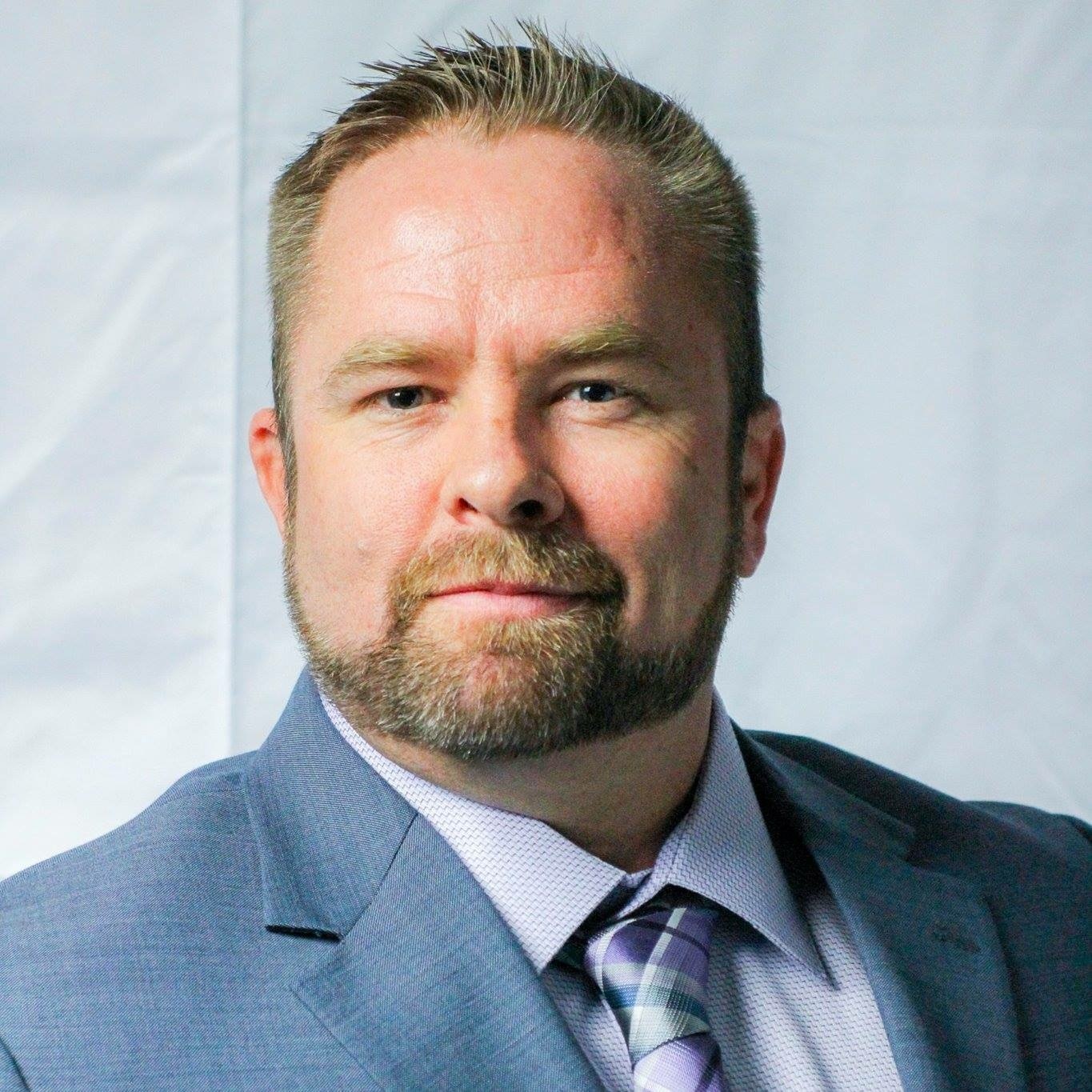 Mike Rux:
For me, 2026 is the year the digital marketer stops being a laborer and finally becomes an architect. When I was managing SEO across 115 locations for a national fitness brand, everything was manual. Keyword mapping, content variations, ranking battles, and reporting. It was pure grind because the smart tools didn't exist yet.
What blows my mind is that many agencies are still doing that same work manually today. They're typing responses, spinning "unique" location content, and fighting for rank position page by page. That entire process should be extinct.
At Ciphers Digital Marketing, AI now handles the friction, the repetition, and the scale. The human side is where the real value lives — strategy, ethics, pattern recognition, and knowing when not to chase a keyword. The manual process is dead. What replaces it is smart strategy, where systems do the labor and humans make the decisions.
Q2: We are entering the era of agentic AI, where software (like Falcon Agent) can now autonomously execute tasks like replying to Google reviews as the owner, making Posts as-needed, and running an analysis of a brand's web presence. As an agency owner who promises "human-centered results," where do you draw the "red line" for automation? Is there a specific client touchpoint you believe an AI agent should never handle?
Mike Rux:
The red line for automation is anything that alters and/or sets trust factors for a brand. AI should never operate alone at the moment the brand takes a position.
Examples of when drawing the red line is key:
- The first response to a negative review & online reputation
- A public reply involving medical, legal, or safety issues
- Messaging that explains why a company does what it does, not just what it does
Letting AI handle friction, speed, and scale doesn't mean giving it authority over human judgment. Human-centered results don't mean rejecting AI; they mean using it as a tool, not a voice. If a touchpoint can shape how someone feels about a business or whether they trust it, that's a decision that must stay human.
Technical Strategy and the 2026 Landscape
Q3: We've analyzed the "hub, wheel, and spoke" strategy you utilize for service-area businesses. It's a smart way to build relevance, but Google's 2026 updates have tightened the "proximity filter" significantly. Are you finding that local SEO, alone, is still enough to increase the radius of a service area, or are we reaching a point where you have to tell clients: "If you don't have a verified address there, you won't rank there"?
Mike Rux:
Local SEO by itself is no longer enough to expand a service radius the way it used to. The hub, wheel, and spoke model still works, but its role has changed. In 2026, it builds relevance and clarity, not proximity.
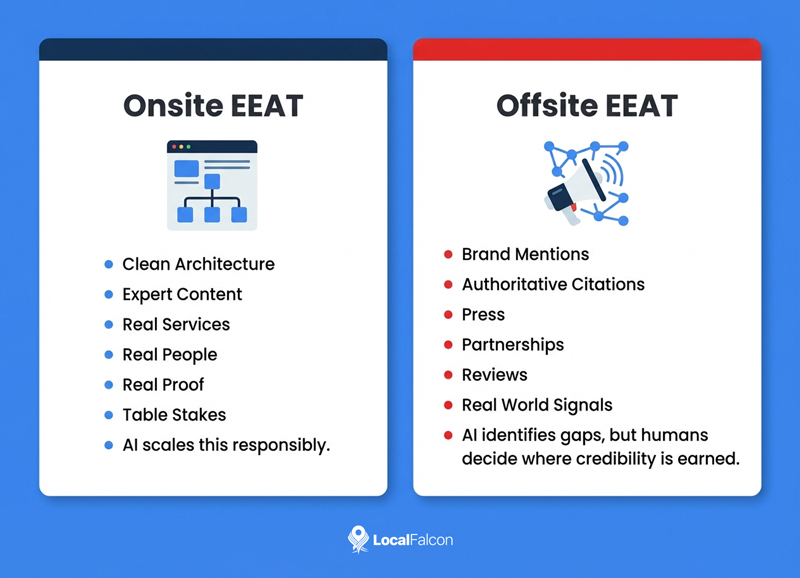
Google's proximity filter is real, and if a competitor is physically closer with a verified address, you're not going to brute-force your way past that with content alone. That's where AI SEO and authority come into play. We look at SEO in two layers:
- Onsite EEAT (Experience, Expertise, Authoritativeness, Trustworthiness): clean architecture, expert content, real services, real people, real proof. Table stakes. AI scales this responsibly.
- Offsite EEAT: brand mentions, authoritative citations, press, partnerships, reviews, real-world signals. AI identifies gaps, but humans decide where credibility is earned.
We don't tell clients, "If you don't have a verified address there, you'll never rank." But we are honest about the rules. Pushing beyond physical proximity requires authority strong enough to offset distance. In 2026, proximity gets you considered; authority gets you chosen.
Q4: Some folks believe the rollout of anonymous Google reviews has made reputation management significantly harder. How are you handling the "ghost" 1-star reviews for your clients? Are you using AI to detect patterns and flag them for removal, or is this just the new cost of doing business?
Mike Rux:
Anonymous reviews raised the bar, but they didn't make reputation management unmanageable. Ghost reviews — one-star reviews with no context — are often competitors, bots, or bad actors.
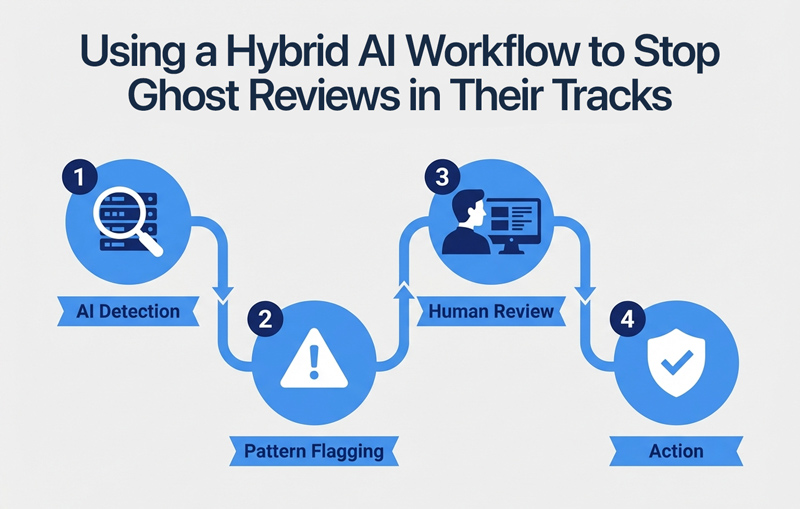
We use AI for detection and pattern recognition: monitoring review velocity, timing, language anomalies, account behavior, and historical patterns. This flags ghost reviews the moment they appear.
But AI never decides intent or communicates with Google. Humans review accounts, context, and client records, then make the judgment. If it's fake, we act fast while signals are still fresh. This isn't just the new cost of doing business — it's a new responsibility. AI sees the problem instantly; humans protect the brand. That's where human-centered results matter.
The Future of Search and Metrics
Q5: Ciphers is an AI-driven agency, and we are now tracking Share of AI Voice (SAIV) alongside traditional Google Maps rankings. Are you seeing a correlation yet between Map Pack rankings and mentions in AI platforms, or are they becoming two different battlegrounds? If a client is #1 on Maps but invisible in Gemini, how does your team fix that?
Mike Rux:
Map Pack rankings are driven by proximity, relevance, and trust signals. AI platforms operate differently — they care about who they trust to answer questions.
We optimize content so AI understands, extracts, and cites it confidently. Strong EEAT onsite and offsite often links good Maps rankings to AI mentions. If a client ranks #1 on Maps but is invisible in Gemini, they rank well locally but lack authority.
Fixing it isn't more blogs. We audit AI interpretation of the site: are answers structured clearly? Is authorship obvious? Are services explained plainly? We then create content AI needs: FAQs, service explanations, and supporting offsite authority. Map visibility gets you found; Share of AI Voice gets you chosen. In 2026, speaking both languages is essential.
Q6: You pride yourself on providing actionable plans rather than just data dumps. When a geo-grid report shows a client hitting a "proximity cliff" — where their rankings drop off sharply just a mile from their office — how do you decide if that's a battle worth fighting? Do you advise clients to focus where they are strong, or do you budget trying to expand that radius further?
Mike Rux:
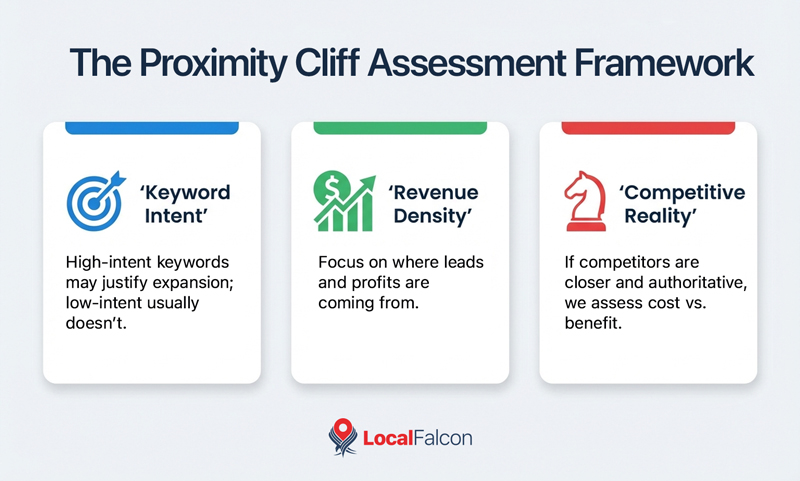
First, don't panic and don't chase rankings just for charts. A proximity cliff is Google saying, "This is where your physical authority ends."
We look at three things:
- Keyword intent – High-intent keywords may justify expansion; low-intent usually doesn't.
- Revenue density, not distance – Focus on where leads and profits are coming from.
- Competitive reality – If competitors are closer and authoritative, we assess cost vs. benefit.
If expansion is worth it, we strengthen offsite authority, tighten relevance signals, and align the hub, wheel, and spoke for that area. Actionable planning is deliberate budgeting: fight where returns justify it, reallocate where they don't.
Wrapping Up
Q7: What's your favorite part about using Local Falcon?
Mike Rux:
Local Falcon removes opinions from the conversation. Proximity maps make local SEO real. Clients see where they are strong, where they fall off, and why location matters. It turns SEO from a mystery into a business decision tied directly to leads and revenue.
Q8: You've mentioned that your primary motivation is providing a "solid, peaceful home" for your family. How do you prevent the 24/7 nature of local SEO — from constant algorithm updates — from intruding on that peace? Is that where reliance on actionable insights comes into play?
Mike Rux:
Early in my career, local SEO was always on. Nights, weekends, and mental space were constantly spent chasing updates.
AI changed that. Now, I focus on decisions, not dashboards. Actionable insights, automated monitoring, and alerts tell me when something matters. If no action is needed, it doesn't get my attention. AI handles the noise; humans step in only when business outcomes are affected. That boundary protects focus, clients, and family.
Q9: If we sit down for this interview again in exactly one year, what current "best practice" in local SEO do you think will be considered "black hat" or obsolete?
Mike Rux:
Creating service pages for every service in every area with thin or lightly rewritten content. Today, it works just enough to defend. Tomorrow, AI-driven entity validation and quality scoring will expose it. One strong service page backed by real authority beats fifty shallow pages every time.
Q10: What's your favorite part about running an agency?
Mike Rux:
Staying ahead while the industry changes. Seeing big players stuck in old habits reinforces that adaptability matters more than size. The real reward is client success — when clients win, grow, and sleep better knowing their marketing is handled correctly.