
For local businesses, online reviews aren't just about reputation — they influence visibility, customer trust, and even how AI platforms describe your company.
While Google Business Profile reviews typically dominate general review conversations, Yelp business reviews still play an important role in local search.
Yelp operates differently from other review platforms. It has its own filtering system, credibility signals, AI-powered insights, and ranking structure. If you want to fully understand how Yelp reviews for business impact growth, this guide will give you the real low-down.
Why Yelp Business Reviews Still Matter
Yelp remains one of the most trusted consumer review platforms out there. More importantly, Yelp users tend to have high intent to purchase.
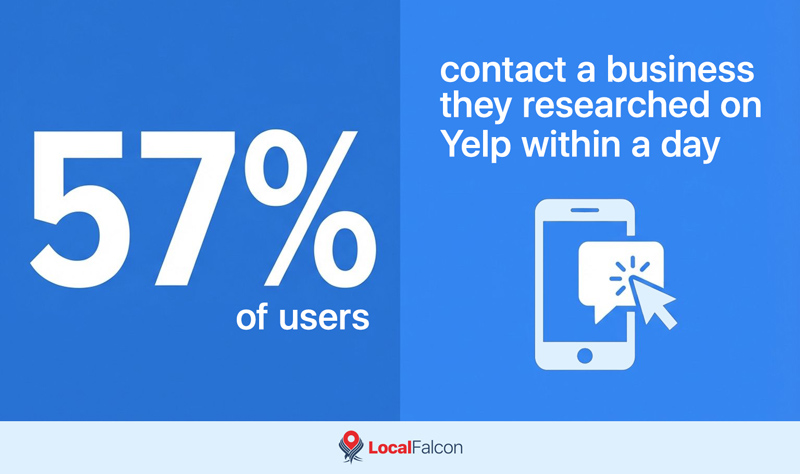
According to Yelp, 57% of users contact a business they researched on Yelp within a day. That means Yelp users aren't just passive browsing — they're actively making decisions.
Yelp Pages Rank Well in Organic Search
Yelp category pages frequently rank on page one of Google for high-intent searches like:
- "Best plumber in [city]"
- "Top auto repair near me"
- "Best divorce lawyer in [city]"
Even if customers don't start their search on Yelp, they often land there by clicking through from organic local search results. That makes your business reviews on Yelp, in addition to other Yelp SEO best practices, a major factor in search-driven conversions.
Yelp and AI Visibility
With AI search gaining more momentum every day, Yelp's influence has expanded.
AI search platforms often rely on third-party review sources when generating local business recommendations. Yelp is cited heavily in local business-related AI answers generated by ChatGPT and similar tools, and even integrates directly with Perplexity for local business data.
This means Yelp reviews influence:
- Whether AI mentions your business
- How it describes your business
- Which competitors get surfaced
In short, Yelp reviews now impact your performance in both traditional search and AI-driven discovery.
Yelp Isn't Just for Restaurants
While Yelp originally built its reputation in the food and hospitality industries, consumers now use it to find nearly every type of local service.
Customers search Yelp for:
- Plumbers
- HVAC technicians
- Electricians
- Auto repair and oil changes
- Dentists and doctors
- Attorneys
- Home improvement contractors
- Salons and spas
From leaky faucets to urgent brake repairs, Yelp is a research hub for service-based businesses.
In other words, if you operate a local service business, Yelp reviews should absolutely be part of your growth strategy.
How Yelp Business Reviews Actually Work
Yelp's review system works a little differently from other local review platforms. Understanding this Yelp-specific functionality is critical if you want to manage your Yelp business review profile strategically.
Recommended Yelp Reviews vs. Not Recommended Reviews
One of Yelp's most misunderstood features is its review filter.
Recommended Reviews
These are the reviews Yelp's algorithm considers most trustworthy and relevant. They:
- Appear in your main review feed
- Count toward your public star rating
- Influence visibility in Yelp search results
Yelp's algorithm favors reviewers who:
- Have completed profiles
- Have written multiple reviews
- Have friends and activity on Yelp
- Show consistent engagement
Reviews from active Yelp users are more likely to be Recommended.
Not-Recommended Reviews
At the bottom of your Yelp page, there may be a link that says something like "1 other review that is not currently recommended."
These reviews:
- Do not count toward your public rating
- Are hidden from the main feed
- Can still be viewed manually
Even legitimate reviews from real customers can land here if the reviewer has little Yelp history or leaves the review from a non-local IP address.
Yelp's filtering system is automated and dynamic. Businesses cannot manually move reviews between sections.
Yelp's Review Filtering System
Yelp's filter runs continuously and evaluates trust signals.
Common reasons reviews get filtered into the "not recommended" section:
- Brand-new accounts
- One-time reviewers
- Suspicious posting patterns
- Overly promotional language
- Potential conflicts of interest
The filter is part of what makes Yelp different. It prioritizes reviewer credibility and review quality over sheer volume.
For business owners, this means getting a few detailed, authentic reviews from established Yelp users is more valuable than simply generating large quantities of reviews.
Yelp Review Insights: AI-Powered Summaries
Yelp has introduced Review Insights, an AI-driven feature that analyzes reviews and groups them together according to commonly mentioned themes, including:
- "Food"
- "Service"
- "Drinks"
- "Ambience"
- "Wait time"
Users can then filter reviews by topic and see a sentiment score. For example, filtering reviews that mention food might show a 90% positive sentiment score.
Why this matters:
- Many users skim insights before reading full reviews.
- These recurring themes shape first impressions instantly.
- AI analyzing Yelp review data may surface similar patterns.
If 30 Yelp reviews mention "friendly staff," that becomes part of your public identity.
Contributor Badges and Yelp Elite Status
Yelp emphasizes reviewer credibility more than most platforms.
When customers read business reviews on Yelp, they see:
- Total reviews written
- Number of friends
- Profile activity
- Elite badges
Yelp Elite users are highly active, recognized contributors. Reviews from Elite users often carry more social weight.
A detailed 4-star review from an Elite member may influence potential customers more than multiple short 5-star reviews from inactive accounts.
Understanding this credibility layer helps you interpret how reviews are perceived.
Multimedia Reviews and Photos
Yelp encourages users to upload photos and videos alongside reviews.
Visual content:
- Increases credibility
- Boosts engagement
- Influences buying decisions
For restaurants, this often means food photos. For contractors, it may show finished projects. For auto shops, before-and-after repairs.
Photos are often scanned before written reviews are read.
How to Respond to Yelp Reviews as a Business
A critical part of managing Yelp business reviews is responding properly.
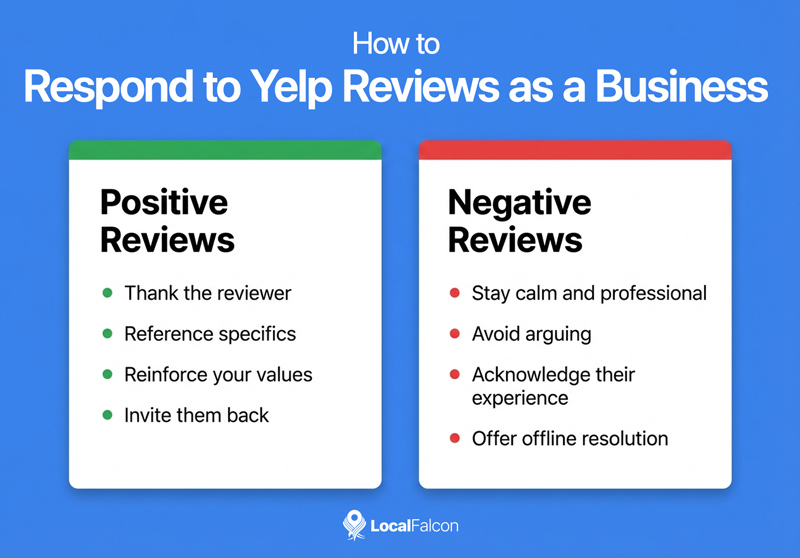
If you're not sure how to respond to Yelp reviews as a business, here are some tips:
For Positive Reviews
- Thank the reviewer personally
- Reference specifics
- Reinforce your values
- Invite them back
This strengthens loyalty and signals attentiveness.
For Negative Reviews
- Stay calm and professional
- Avoid arguing
- Acknowledge their experience
- Offer to resolve offline
Future customers judge your professionalism by how you handle criticism.
Managing Review Disputes and Policy Violations
Businesses cannot remove reviews simply because they disagree with them. Yelp controls moderation and applies its Content Guidelines consistently.
If a review appears to violate guidelines — for example, if it reflects a conflict of interest, harassment, or isn't based on a real customer experience — you can report it through your Yelp Business dashboard. Yelp then reviews the case and determines whether action is warranted.
Are Fake Yelp Reviews a Problem?
While not as widespread as fake reviews on Google, fake Yelp business reviews do occur — and because Yelp pages rank well in search and influence AI-generated summaries, even one misleading review can affect perception and performance.
Fake Yelp business reviews may include:
- Competitors leaving negative feedback to hurt your reputation
- Businesses attempting to post fake positive reviews to boost their own reputation
Fortunately, fake Yelp reviews are taken seriously. Yelp actively filters suspicious activity and removes reviews that violate guidelines when identified.
That said, no system is perfect, which is why monitoring your profile and reporting suspected fake Yelp reviews matters.
How to Get Yelp Reviews (Without Violating Guidelines)
Yelp has a policy against directly asking customers for reviews and prohibits incentives.
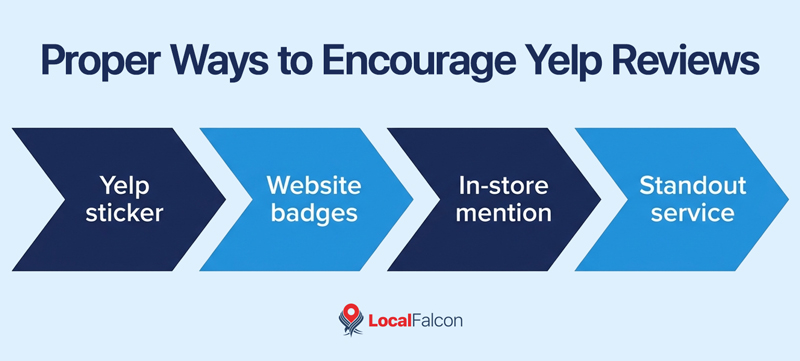
Instead, Yelp suggests leaving subtle signals to encourage customers to leave reviews on the platform — a "trail of breadcrumbs," as they put it.
You can:
- Display a free "Find Us on Yelp" sticker
- Add Yelp badges to your website
- Mention your Yelp presence in-store
- Focus on delivering standout service
The strongest Yelp review strategies prioritize experience and authenticity over solicitation.
FAQs About Yelp Business Reviews
Can business owners delete Yelp reviews?
No. Only Yelp can remove reviews that violate its guidelines.
Are businesses notified of Yelp reviews?
Yes. Claimed Yelp business accounts can enable notifications for new reviews.
Can business owners respond to Yelp reviews?
Yes. Businesses can (and should) publicly respond to Yelp reviews, both positive and negative.
Can Yelp reviews be fake?
Yes. Fake Yelp reviews exist, though Yelp filters many suspicious submissions automatically.
Are fake Yelp reviews taken seriously?
Yes. Yelp emphasizes review filtering and moderation to maintain review integrity, and you can report suspicious reviews to try and get them removed.
Final Thoughts
Yelp isn't just another review site you "set and forget." It's a platform with its own rules, algorithms, AI-powered Review Insights, and visibility dynamics.
Because Yelp doesn't allow direct review solicitation, your Yelp review strategy must differ from your Google review management approach. Focus on:
- Earning authentic reviews from real, engaged users
- Monitoring your profile regularly
- Responding professionally and consistently
- Understanding how Yelp's filters and credibility signals shape what the public actually sees
And now, with AI platforms increasingly referencing Yelp data when generating local business recommendations, your Yelp profile influences not just human searchers, but AI-generated answers as well.
For local businesses, Yelp is a reputation, search, and AI visibility asset. The more you understand how Yelp business reviews truly function behind the scenes, the more control you have over how your business is discovered, described, and chosen.