
For local businesses working to attract customers through AI search, getting mentioned by AI is just the start. Just as important is ensuring that the AI actually recommends your business when it surfaces in AI-generated overviews and answers.
If AI isn't persuasively recommending your business, or worse, the AI's brand sentiment is negative, potential customers are more likely to choose competitors who the AI talks about using more positive, persuasive sentiment.
Fortunately, negative brand sentiment in AI isn't the end of the world. There are steps brands can take to fix it.
Follow These 5 Steps If You Want To Fix Negative Brand Sentiment in AI
1. Understand Your Visibility and Sentiment
In order to know how to fix negative brand sentiment in AI, you first must understand your AI visibility and sentiment.
Start by running an AI visibility scan in Local Falcon for key queries to take advantage of the AI sentiment analysis built into every Scan Report.
This will not only quantify how often your brand is mentioned by AI across leading platforms, but also how much positive, neutral, or negative brand sentiment in AI you have.
You'll see a Buyer Persuasion Score (BPS), which tells you how persuasively AI talks about your business in a positive or negative light (+10 is a very strong recommendation for and -10 is a strong recommendation against). You'll also see a list of brand phrases, or terms that AI frequently uses to talk about your business, along with a positive, neutral, or negative sentiment category.
Once you have a strong understanding of your brand sentiment for target queries and locations, you can start taking steps to fix any negative sentiment surfacing in AI.
2. Address Any Customer Issues Causing Negative Brand Sentiment in AI
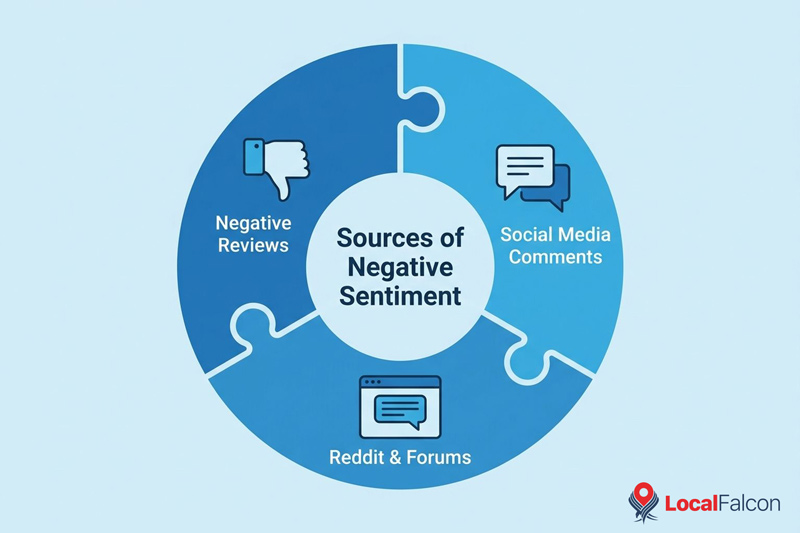
Negative brand sentiment can surface in AI from a range of customer-generated sources, including reviews and comments on social media or forum-style platforms like Reddit.
So, the first thing you need to do if you want to fix negative brand sentiment in AI is address any problems that are leading customers to leave those types of negative reviews or comments.
It's a good idea to also run a review analysis of all your Google reviews to surface any recurring issues leading to negative customer sentiment (and by extension, negative AI sentiment). Then, you can start fixing the problems causing those issues.
For example, a restaurant might find out that there are repeated issues with slow service, so they could take steps to improve service speed by training or adding staff or otherwise optimizing operations.
3. Check What Sources AI Is Drawing From and Optimize
Local Falcon's AI visibility Scan Reports include a section listing all the sources cited by AI in the scans. Looking at this list gives you a good idea of what's influencing negative brand sentiment in AI-generated search results.
Looking at the source information gives you a list of good places to optimize your brand presence in order to influence what AI says about it and improve sentiment.
Note that this list includes all sources found, including those cited when mentioning competitors, so it can give you additional ideas for where to optimize if a competitor gets recommended by the AI instead.
For instance, if you see that AI recommends a competitor because their business is featured in a blog post about "10 Best [business type] in [city] for Couples," you could try and get featured in a similar post to improve brand sentiment.
4. Actively Build Positive Brand Signals Across the Web
Once you know which sources AI is drawing from, you can take a proactive approach to building positive brand signals in those same channels and beyond.
This includes:
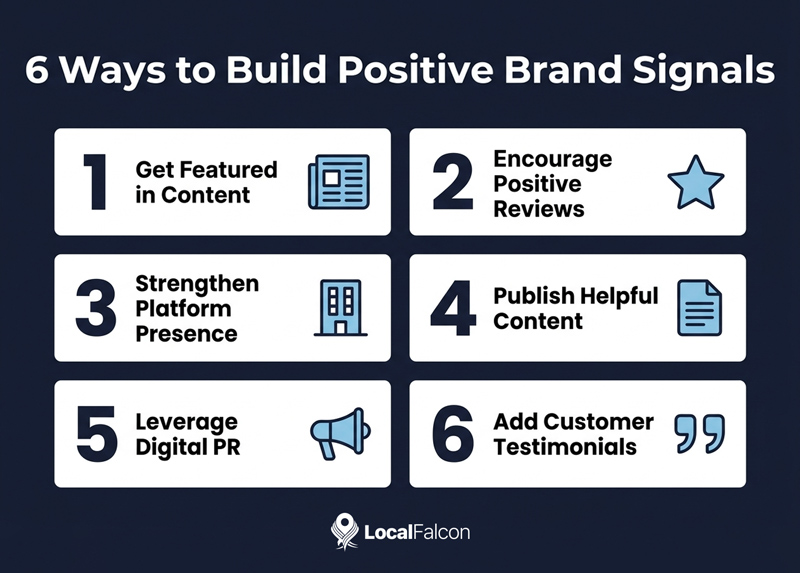
- Getting featured in third-party content: Reach out to local bloggers, journalists, and publishers to get your business included in "best of" roundups, neighborhood guides, and review articles. AI heavily cites these types of editorial sources.
- Encouraging satisfied customers to leave reviews: Since reviews are a major input for AI sentiment, a steady stream of genuine, positive reviews across Google and other platforms can shift how AI describes your business over time. Responding to existing reviews (positive and negative) also signals active brand management.
- Strengthening your presence on authoritative platforms: Make sure your profiles on Yelp, Tripadvisor, Facebook, and any industry-specific directories are complete, accurate, and filled with positive engagement.
- Publishing helpful content on your own site: Blog posts, FAQs, and service pages that clearly describe what makes your business great give AI more positive, first-party material to draw from.
- Leverage digital PR and press releases: When your business has a positive announcement to share, like a new location, an award, or a community initiative, distribute a press release through a wire service or pitch it to local media. These stories get picked up by authoritative news and industry sites that AI frequently cites, giving AI more positive, credible material to draw from when describing your brand.
- Add customer testimonials to your website: AI crawls your own site as a source, so dedicating a page or section to genuine customer testimonials puts positive brand language directly where AI can easily find it. The more specific and descriptive the testimonials, the more useful they are as a brand signal.
The key is consistency. AI sentiment is a reflection of the overall digital footprint of your brand, so building positive signals across multiple sources compounds over time.
5. Monitor Sentiment Over Time and Re-Scan Regularly
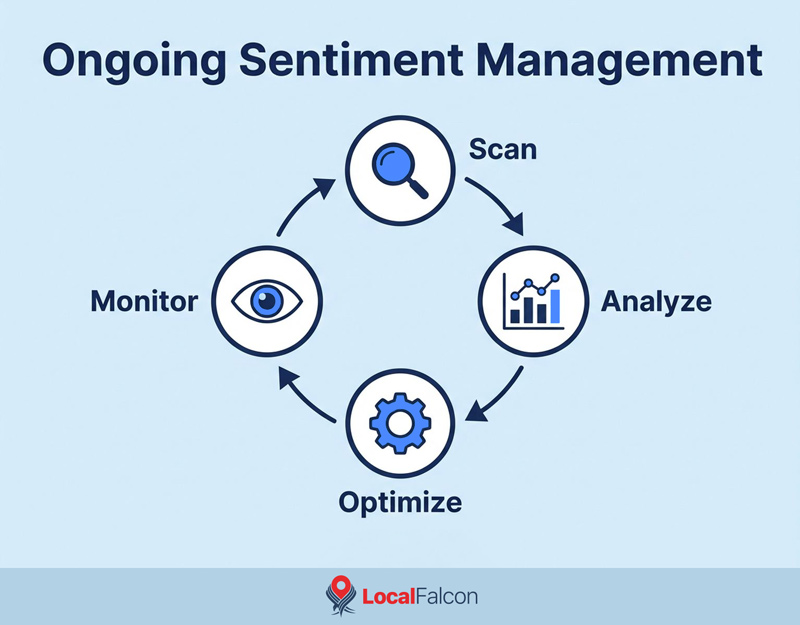
Fixing negative brand sentiment in AI isn't a one-and-done task. It's an ongoing process that's now as important to local SEO as Google Business Profile optimization. As you make changes, it's important to track whether those changes are actually moving the needle.
Re-run your Local Falcon AI visibility scans periodically and check the brand sentiment analysis metrics to see if your Buyer Persuasion Score is improving and whether any negative brand phrases are being replaced with more positive ones. Treat your BPS like you would a keyword ranking: something to monitor consistently and optimize over time.
If you notice certain queries or locations still showing negative sentiment after you've made improvements, that's a signal to dig deeper into what sources are still influencing those results and whether there are persistent or additional customer issues to address.
Fixing Negative Brand Sentiment in AI Takes Time, But It's Worth It
AI search is increasingly where buying decisions begin. If AI is describing your business negatively, or simply not recommending it strongly enough, you're losing customers before they ever visit your website, pick up the phone, or walk through your door.
The good news is that AI sentiment is not static. It reflects the current state of your brand's digital presence, which means you have real power to change it. By systematically addressing customer issues, building more positive brand signals, and monitoring your results with tools like Local Falcon, you can shift AI sentiment in your favor and turn AI search into a genuine growth channel for your business.
FAQs on Fixing Negative Brand Sentiment in AI
How long does it take to fix negative brand sentiment in AI?
There's no fixed timeline, as it depends on how much negative sentiment exists and how aggressively you work to address it. Generally, consistent effort over several weeks to months is needed before you start seeing meaningful shifts in your Buyer Persuasion Score.
What causes negative brand sentiment in AI?
Negative brand sentiment in AI is typically driven by negative customer reviews, critical social media comments, and unfavorable mentions on platforms like Reddit. AI pulls from these sources when forming its perception of your brand.
Can I remove negative brand sentiment from AI results?
You can't directly edit what AI says about your business, but you can influence it over time by resolving the underlying customer issues causing negative feedback and building a stronger base of positive brand signals across the web.
Does responding to negative reviews help with AI sentiment?
Responding to negative reviews shows active brand management and can encourage resolution, but the bigger impact comes from actually fixing the issues causing those reviews in the first place.
How often should I scan my AI brand sentiment?
Running a Local Falcon AI visibility scan at least once or twice a month is a good baseline, though more frequent scans are worthwhile if you are actively working to improve your sentiment or operating in a highly competitive market.