Local Falcon is a different way of visualizing ranking data in local search. Below is a list of answers to our most frequently asked questions. For even deeper learning, you can always check out our knowledge base as well.
Answers for:
What does ARP & ATRP mean?
In your Scan Reports, ARP = Average Rank Position and ATRP = Average Total Rank Position.
The difference is that the ARP is an average of only the pins that actually have a result (position 20 or less), while ATRP averages all the pins, even when a business is not found (20+).
This difference helps you compare if a business is ranking well across a wide area, or if they are ranking well in only a small area within the search grid.
What is a Google Business Profile?
A Google Business Profile (GBP) is a free business listing on Google that allows you to manage how your business appears on Google Search and Maps. It includes your business name, location, hours, photos, services, products, reviews, and other important information that helps customers find and learn about your business.
Falcon AI is Local Falcon's built-in AI that analyzes your scan results and local search data to give you clear, actionable insights. It helps you identify potential issues with your Google Business Profile, highlights optimization opportunities, and suggests relevant citation sources to improve your local search visibility. Falcon AI analysis is also available in AI visibility reports, providing hyperlocal insights into how you can expand your visibility footprint across AI search.
What is Share of AI Voice?
Share of AI Voice (SAIV) is a metric to quantify a brand's presence and prominence in AI-generated search results. SAIV measures how frequently a brand is mentioned when an AI summary is triggered for the given keyword across the area you searched, and brand mentions were detected within that summary (we do not factor AI summaries with no mention of any brand into the score).
A higher SAIV score indicates greater visibility for the given keyword and grid area, potentially leading to increased brand awareness, relevance and customer engagement.
What is the geo-grid?
The geo-grid is Local Falcon's signature feature that displays your rankings at specific points on an interactive map (the Scan Explorer). It shows exactly where your business appears in local map pack results or AI-generated search results for any keyword across your service area, helping you visualize your visibility patterns and identify areas for improvement.
What is the Map Scan radius?
The Map Scan radius is a search area defined by the distance from your business that your Map Scan covers (in all directions), as well as the number of data points you are using within the search area.
Changing these parameters allows you to see better, more detailed data on how your business ranks for different keywords at specific distances, so you can pinpoint exactly where your rankings for different keywords start to fall off.
What are Campaigns in Local Falcon?
Campaign Scans allow you to automate recurring local and AI search visibility rank tracking scans for one or more business locations, using fully customizable scan settings and delivering automated Campaign Reports to you and anyone else you want to keep in the loop each time a scan is completed.
What is Local Falcon's Suggested Keywords feature?
Local Falcon's Suggested Keywords feature provides relevant keyword recommendations for Map Scans. These suggestions are based on terms consumers use to find your business on Google. This feature also shows you the estimated monthly impressions your business is getting for those terms. You'll also receive additional AI-generated keyword recommendations thanks to Falcon AI, as well as ideas based on the business's currently suggested GBP categories.
What are Local Falcon scan settings?
Scan settings are various parameters you can set for running Map Scans in Local Falcon to optimize your local rank tracking data visualization and Local Falcon credit usage.
What is a "credit" in Local Falcon?
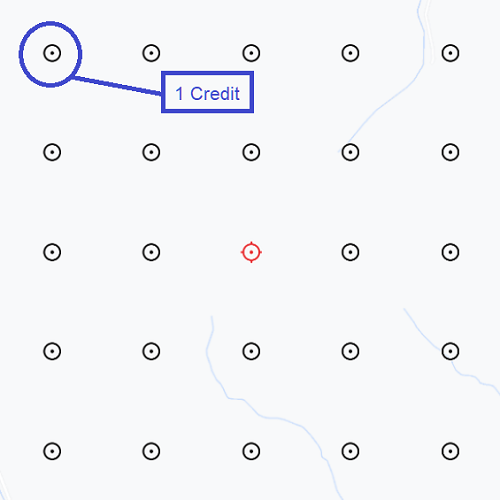
One credit is one data point (we call the map pins used on the geo-grid "data points"). If you are running a 5x5 scan, you will use 25 credits.
What are Looker Studio Templates?
Looker Studio Templates are custom report templates we've built out for different types of Local Falcon reports, making it easier to instantly get the data visualization you need when you send reports to Looker Studio.
What is the Credits Explorer?
Local Falcon's Credits Explorer tool gives you a high-level overview of your credit usage, breaking down what types of scans your credits are going towards for a selected time period, including forecasting your credit usage for upcoming scheduled scans.
What is local rank tracking, exactly?
Local rank tracking shows you how visible your business is across local search platforms, inlcuding Google Search and Google Maps (Google Business Profile rankings), Apple Maps (Apple Business Connect rankings), and even AI-powered search experiences (AI visibility). By measuring your rankings for specific keywords at specific locations, local rank tracking acts as your local SEO scoreboard, helping you spot trends, diagnose issues, and find new opportunities to improve visibility.
What is Google AI Overviews?
Google AI Overviews is an AI-powered Google Search feature that replaces traditional local business listings (like the Google 3-Pack) with AI-generated summaries, personalized recommendations, and contextual information drawn from multiple sources across the web. Instead of just showing business listings, it creates comprehensive overviews highlighting key attributes and answering common questions.
What is local AI visibility tracking and how does it work?
Local AI visibility tracking monitors how often and how prominently your business appears in AI-generated responses from platforms like ChatGPT and Google AI Overviews. Unlike traditional rankings where you have a specific position (1st, 2nd, etc.), AI visibility measures whether your business is mentioned, how it's described, and what sources AI cites when discussing your business.
What is MCP, and why does it matter?
MCP stands for Model Context Protocol. It allows AI tools like ChatGPT and Claude to securely connect to your Local Falcon account and access real-time scan data, rankings, competitor reports, and more, all to deliver smarter, context-aware SEO insights.
What is Google's local pack?
The local pack, also known as Google's 3-Pack, is a prominent feature displayed at the top of Google's local search results, typically showing three Google Business Profile listings that match the user's search query. It's one of the most visible and competitive spaces for local businesses aiming to attract nearby customers.
What is ChatGPT and how is it changing local search?
ChatGPT is an AI assistant that's changing how people search for local businesses. Instead of typing queries into traditional search engines, users are asking ChatGPT for local recommendations, expecting comprehensive, immediate, and trustworthy answers. This represents a significant shift in how consumers discover and evaluate local businesses.
What is the Local Falcon Local Keyword Tool?
The Local Keyword Tool helps you discover locally relevant keywords your customers are actually searching with, using AI to generate suggestions based on your location, business type, and local market conditions and trends. The tool also provides the AI's reasoning behind each keyword recommendation for added context.
What does a keyword's WYN score mean in the Local Keyword Tool?
WYN stands for Weighted Yield Number. The WYN score estimates how valuable a keyword is for your business based on local search volume, intent, competition, and trends.
What is Grok and why is it important for my business?
Grok is an AI assistant built into the X social media platform that delivers instant answers to conversational user queries. Tracking your AI visibility in Grok helps you understand your presence in AI-driven social discovery, allowing you to reach customers at the precise moment they're seeking local solutions.
What is Gemini and why is it important for my business?
Gemini is Google's flagship AI assistant and the AI model that powers it and other AI search features on Google. It's integrated across Search, Android, Gmail, and other Google apps and services. Tracking your business in Gemini shows how often and in what context your brand is recommended in AI-powered conversations within this digital ecosystem, helping you stay competitive in AI-driven local discovery.
What is a Trend Report?
A Trend Report is an automatically generated Local Falcon report that appears after you've run two or more scans using the same parameters (location, keyword, data source, radius, etc.). It charts how your visibility (and that of your competitors) changes over time using metrics like ARP, ATRP, and SoLV or SAIV, giving you an at-a-glance view of your local SEO performance trends over time.
What is SoLV Distance?
SoLV Distance measures how far away from your business you rank in the top 3 compared to how far your competitors rank in the top 3 from their locations. A higher SoLV Distance means your high-ranking visibility covers a wider geographic area. The goal is to match or exceed the competitor average to demonstrate strong local reach.
Your Distance: The average distance to all grid points where you rank in the top 3.
Competitor Average Distance: The same calculation averaged across all competitors.
What is Local Falcon's AI Reviews Analysis tool?
The AI Reviews Analysis tool instantly analyzes Google reviews for your business and its top competitors. It provides an in-depth report on overall sentiment, highlighting what's working and what's not, giving you valuable insights drawn from specific feedback, and offering up strategic suggestions for how to get more positive reviews that could boost your ranking in local search results.
What is Google AI Mode and why does it matter for my business?
Google AI Mode delivers AI-generated answers directly in Google Search, often summarizing multiple sources in conversational responses to user queries. Tracking your business's presence in AI Mode shows if you're being featured in these AI-generated results, which is increasingly important as users rely more on AI responses to make local decisions.
What is OSoLV (Opportunity Share of Local Voice)?
OSoLV measures your opportunity to become the top-ranking business by comparing your Share of Local Voice (SoLV) directly to the best-performing competitor in the scan. Closing the gap between your SoLV and the Top SoLV indicates progress toward market leadership in your local area.
Your SoLV: How often you appear in the top 3 search results.
Top SoLV: The highest SoLV among all competitors.
What is the BPS in AI visibility reports?
BPS stands for Buyer Persuasion Score and measures how persuasively AI platforms recommend, or dissuade potential customers from choosing, your business when responding to relevant queries. The BPS takes into account the specific language AI uses about your brand in order to calculate a score from -10 (strongly recommends against) to +10 (strongly recommends).
What is sentiment analysis?
Sentiment analysis is the process of evaluating whether language about your business is positive, negative, or neutral. In Local Falcon, sentiment analysis shows you how AI platforms actually talk about your business, not just whether you appear. It runs in the AI analysis sections of your reports and in the Brand Phrases section of AI platform reports, and it also applies to your customer reviews in the AI Reviews Analysis tool. Together, this tells you what AI platforms and customers are really saying about you, so you can act on it.
What is AI search visibility?
AI search visibility measures how often and how favorably your business appears in the answers AI platforms generate about your products, services, or industry. It reflects whether AI tools mention your business, how accurately they describe it, and how persuasively they recommend it. Local Falcon tracks AI search visibility across platforms on a geo-grid so you can see exactly where you appear and where you do not.
What is retrieval-augmented generation (RAG)?
Retrieval augmented generation, or RAG, is a method where an AI model looks up relevant, up-to-date information at the moment you ask a question, then uses what it finds to write its answer. This helps the AI give more accurate and current responses instead of relying only on what it learned during training. For local businesses, RAG is part of why keeping your online information accurate matters, since AI tools may pull it in live when answering questions about you.
What is semantic search?
Semantic search is search that focuses on the meaning and intent behind a query rather than just matching exact keywords. It uses the relationships between words and concepts to understand what someone really wants, so a search for a service near a city can surface relevant businesses even without an exact keyword match. For local businesses, semantic search rewards clear, well-organized information that explains what you do and who you serve.
What is E-E-A-T?
E-E-A-T stands for Experience, Expertise, Authoritativeness, and Trustworthiness, a framework Google uses to judge the quality and credibility of content. AI tools increasingly rely on similar signals to decide which sources to trust and cite. For local businesses, strengthening E-E-A-T means earning genuine reviews, keeping accurate information online, building topical authority via your site and blog, and being recognized as a real, credible business, all of which support both AI visibility and local rankings.
What are the local search ranking factors?
Local search ranking factors are the signals Google uses to decide which businesses to show for a local search, and they fall into three main categories: relevance, distance, and prominence. Relevance is how well your business matches what someone is searching for. Distance, sometimes called proximity, is how close your business is to the searcher or the area they are searching in. Prominence is how well known and trusted your business is, based on signals like reviews, your online presence, and overall reputation. Local Falcon maps your rankings across a geo-grid so you can see where relevance, distance, or prominence is holding you back.
What is a Google CID (and Place ID)?
A Google CID, or Customer ID, is a unique number Google assigns to a specific business location, and a Place ID is a similar unique identifier used in Google Maps and the Places database. These IDs let tools and platforms point to exactly the right business location without confusion. For multi-location businesses, they help ensure rankings and data are tied to the correct listing.
What is local SEO?
Local SEO is the practice of improving a business's visibility in local search results so it appears when nearby customers look for the products or services it offers. It focuses on earning placements in the Google local pack, Google Maps, local organic results, and AI search platforms, and it depends on signals such as your Google Business Profile, your reviews, and consistent business information across the web. Local Falcon measures local SEO performance by scanning your rankings across a geo-grid of real map points, so you can see exactly where you appear and where you do not.
What is generative search?
Generative search is a type of search where an AI model writes a direct answer to your question by drawing on many sources, instead of returning a ranked list of links. It powers experiences like Google AI Overviews, ChatGPT, Gemini, and Grok. For local businesses, generative search shifts the goal from ranking a webpage to being included and accurately described inside the AI-generated answer itself.
What is Google Business Profile verification?
Google Business Profile verification is the process Google uses to confirm that you are the legitimate owner or representative of a business before you can manage its listing. Verification can happen by phone, email, video, or postcard, depending on the business. A verified profile is required to edit your information and is an important trust signal. Keeping your verified profile accurate supports both how AI platforms represent you and your local rankings.
What is agentic AI (an AI agent)?
Agentic AI refers to AI tools that can take actions on their own to complete a task, not just answer a question. An AI agent might autonomously research options, compare them, and even contact or book a business on a person's behalf. For local businesses, agentic AI raises the stakes for accurate, accessible information, since an agent may choose and act on a recommendation with little human review. Keeping your business details correct and easy for AI to read helps you stay in consideration.
What is Bing Places for Business?
Bing Places for Business is a free tool from Microsoft that lets businesses manage how they appear in Bing search and maps, similar to managing a GBP listing on Google. It controls details like your name, address, hours, and categories on Bing. Because some customers and AI tools draw on Bing data, keeping this listing accurate and optimized supports your visibility beyond Google.
What is an entity (and the knowledge graph)?
In search, an entity is a clearly defined "thing" that search engines and AI systems can recognize and tell apart from others, such as your specific business, a person, a product, or a place. The knowledge graph is the large network of entities and the relationships between them that Google and AI tools use to understand the world. When your business is a well defined entity with consistent information across the web, AI tools and search engines can recommend it more confidently and accurately.
What is an AI hallucination?
An AI hallucination is when an AI tool gives an answer that sounds confident and plausible but is actually inaccurate or made up. It can happen when the AI fills gaps with outdated information, mixes up sources, or invents details. For local businesses, a hallucination might mean an AI tool reports the wrong hours, the wrong location, or an inaccurate description of what you offer. Monitoring how AI tools describe your business helps you catch and correct these errors before they reach customers.
What is a citation in AI search?
In AI search, a citation is a source an AI platform references when it generates an answer. Citations reveal which websites and pages the AI relied on, and they influence which businesses get mentioned. Local Falcon can show you which sources AI platforms use when answering questions about your business, so you can focus on earning placement where AI already looks.
What is extractability?
Extractability is how easily a piece of content can be lifted out and reused by an AI tool without needing surrounding context. Highly extractable content is clear, direct, and self contained. For businesses, making your key information extractable increases the chance it appears, accurately, inside AI generated answers.
What is Apple Business Connect?
Apple Business Connect is the free business listing tool businesses use to manage how they appear on Apple Maps, including their name, location, hours, photos, and other details. It is Apple's way of letting you control the information Apple Maps users see about your business. Because many customers search on Apple Maps, keeping this listing accurate ( via an Apple Maps Place Card) supports your visibility there. Local Falcon can track your rankings on Apple Maps alongside Google Maps.
What are Google Business Profile categories and attributes?
On Google Business Profile, categories describe what your business is, with one primary category and up to nine additional ones, while attributes are specific features you can add, such as wheelchair accessible, offers delivery, or woman owned. Together they help Google and customers understand what you offer and when to show you. Choosing accurate categories and relevant attributes is one of the most direct ways to improve which local searches your business appears in.
What is reputation management?
Reputation management is the ongoing practice of shaping how people perceive your business, mainly by earning and responding to reviews, keeping accurate information online, and addressing feedback. A strong reputation supports both how AI platforms represent you and your local rankings. For local businesses, reviews are often the single biggest reputation signal. Local Falcon helps you monitor reviews and how your reputation shows up across AI and local search.
What is AI search?
AI search is a way of finding information where an AI model answers your question directly, drawing on many sources to generate a response, rather than returning a ranked list of websites. It powers experiences like ChatGPT, Google AI Overviews, Gemini, Grok, and Google AI Mode. For local businesses, AI search is becoming a major way customers discover and choose providers.
What is organization schema?
Organization schema is structured data that describes your company to search engines and AI tools, including details like your name, logo, contact information, and official profiles. It helps these systems clearly identify your business as a recognized entity. For businesses, organization schema strengthens how accurately AI tools and search engines understand and represent you.
What is generative AI?
Generative AI is artificial intelligence that can create new content, such as written answers, summaries, images, or recommendations, rather than simply retrieving existing information. In search, generative AI is what produces the conversational answers you see in tools like ChatGPT, Google AI Overviews, Gemini, and Grok. Because these tools generate a single conversational response instead of a list of links, generative AI is changing how customers discover and choose local businesses. Local Falcon helps you track how your business shows up in these AI generated answers.
What is a geo modifier (local keyword)?
A geo modifier is the part of a search that names a location, like a city or neighborhood, or the phrase "near me," which indicates local intent. Adding a geo modifier turns a general search into a local one, such as a service paired with a city name. These local keywords signal that someone wants nearby options, which is exactly when local businesses have the best chance to appear. Local Falcon lets you track how you rank for local keywords across a map of real locations.
What is an atomic answer?
An atomic answer is a short, self-contained response, usually one to three sentences, that fully answers a single question without needing extra context. AI tools favor atomic answers because they are easy to lift directly into a generated response. For businesses, writing clear, direct answers to common questions makes your content more likely to be picked up and cited by AI tools.
What is NAP consistency?
NAP stands for Name, Address, and Phone number, the core contact details that identify your business online. NAP consistency means those details are listed the exact same way everywhere your business appears, including your website, your Google Business Profile, directories, and social profiles. Consistent NAP information helps AI tools and search engines trust that your business is real and accurate, which supports your local rankings and how you are represented in AI answers. Inconsistent details can confuse those systems and weaken your visibility.
What is a data aggregator?
A data aggregator is a company that collects business information, like name, address, phone number, and hours, and distributes it across many directories and platforms. Search engines and AI tools may draw on this data, so an error at an aggregator can spread widely. For local businesses, keeping your details accurate with major data aggregators helps keep your information consistent everywhere it appears.
What is brand safety in AI search?
Brand safety in AI search means making sure AI platforms describe your business accurately and represent it the way you intend. Because AI tools generate answers from many sources, they can sometimes share outdated, incomplete, or incorrect information about you. Monitoring how AI platforms talk about your business helps you catch and correct problems before they affect customers. Local Falcon shows you both whether you appear and how you are described across AI platforms.
What is topical authority?
Topical authority is the depth and consistency of expertise a website demonstrates on a particular subject. When a site covers a topic thoroughly and accurately, search engines and AI tools are more likely to treat it as a go-to source. For local businesses, building topical authority around your services and service area helps you show up more often in both AI-generated answers/overviews and traditional local search.
What is grounding in AI search?
Grounding is the practice of anchoring an AI tool's answers in real, verifiable sources rather than letting it rely only on its training data. A grounded answer is tied to actual information the AI can point to, which makes it more accurate and trustworthy. For local businesses, grounding means that accurate, well-sourced information about you online makes it more likely an AI tool represents you correctly.
What are Google Local Services Ads?
Google Local Services Ads (LSAs) are pay per lead ads that appear at the very top of certain local searches, above the local pack, often with a Google Screened or Google Guaranteed badge. They let eligible local businesses pay only when a customer contacts them through the ad. While they are separate from organic local rankings, they share the same goal of capturing nearby customers.
What is local search intent (near me searches)?
Local search intent is when someone is looking for a business, product, or service near them, often signaled by phrases like near me or a city name, or simply by searching from a mobile device. These searches show a strong intent to visit or contact a nearby business soon. For local businesses, ranking well for searches with local intent is where most of the opportunity is. Local Falcon helps you measure how visible you are for these location-based searches.
What is AI answer variation (AI volatility)?
AI answer variation, sometimes called AI volatility, is the way AI platforms can give different answers to the same question from one moment to the next. The wording of the question, the platform, the timing, and the sources available can all change which businesses get mentioned. For local businesses, this means your AI visibility is not fixed, so tracking it over time matters. Local Falcon scans AI platforms repeatedly so you can see how your visibility shifts.
What is llms.txt?
llms.txt is a simple text file placed in the root of a website that helps AI tools find and understand the most important content on that site. It works a bit like robots.txt, but instead of guiding search engine crawlers, it points AI models toward the pages and information you most want them to use. Adding an llms.txt file is one early way businesses are making their content easier for AI tools to read and cite accurately.
What is zero-click search?
A zero-click search is when someone gets the answer they need directly on the results page or inside an AI-generated answer, without clicking through to any website. Features like the Google local pack, featured snippets, and AI generated answers all create zero-click search experiences. For local businesses, this means being mentioned and accurately represented in the answer matters, even when no one visits your site. Local Falcon helps you track whether your business appears in these answers across AI tools and local search.
What is an answer engine?
An answer engine is an AI powered system that responds to a question with a direct, synthesized answer instead of a list of links. Tools like ChatGPT, Google AI Overviews, Gemini, Grok, and Google AI Mode are answer engines: they read across many sources and generate a single response. For local businesses, answer engines increasingly decide which companies get recommended when someone asks where to go or who to hire.
What is BLUF (Bottom Line Up Front)?
BLUF stands for Bottom Line Up Front, a writing approach where you put the main answer in the very first sentence before adding any detail. It makes content easier for both readers and AI tools to scan and extract the key point. For businesses, leading with the answer increases the chance an AI tool uses your content when responding to a question.
What is Google Maps ranking, and how is it different from organic ranking?
Google Maps ranking is where your business appears in the results on Google Maps and in the local pack at the top of Google Search when someone searches for a nearby product or service. It is different from organic ranking, which is the list of website links in standard search results. Maps rankings depend heavily on local signals like your Google Business Profile, your reviews, and your distance from the searcher. Local Falcon tracks your Google Maps ranking across a geo-grid of real locations, not just a single point.
What is a prompt in AI search?
In AI search, a prompt is the question or request someone types into an AI tool like ChatGPT, Gemini, Google AI Mode, or Grok. The exact wording of a prompt shapes the answer the AI gives, including which businesses it mentions, when relevant. For local businesses, customers may ask for recommendations in many different ways, so it helps to be visible across a wide range of prompts. Local Falcon tracks how your business appears across the prompts your customers are likely to use.
What is citation authority?
Citation authority is the credibility a website earns from how often and how favorably AI tools reference it as a source. In AI search it plays a role similar to the one backlinks play in traditional search, helping AI systems decide which sources to trust. For local businesses, earning citation authority means being referenced by the sites and platforms that AI tools already rely on. Local Falcon provides local citation intelligence, showing you exactly what sources AI is referencing in your industry and area for both your business and its competitors, which can help you build citation authority across the ones that matter most.
What is natural language processing (NLP)?
Natural language processing, or NLP, is the area of artificial intelligence focused on helping computers understand the meaning and intent behind human language. It is what lets AI tools and search engines interpret everyday questions instead of just matching keywords. For businesses, NLP is why clear, naturally written information about what you do helps AI tools answer questions about you correctly.
What is prompt engineering?
Prompt engineering is the practice of carefully wording the questions or instructions given to an AI tool to get clearer, more accurate, or more useful answers. The way a prompt is phrased can change the response, including which businesses an AI tool mentions. While prompt engineering is mainly a skill for people using AI tools, it also helps marketers understand the many ways customers might ask about a business. That range of phrasing is part of why broad AI visibility matters.
What is Answer Engine Optimization (AEO)?
Answer Engine Optimization (AEO) is the practice of optimizing your business information and content so AI answer engines recommend and accurately represent your business when people ask questions. Instead of competing for a spot in a list of links, AEO focuses on becoming the answer that AI platforms like ChatGPT, Google AI Overviews, Gemini, and Grok surface directly. For local businesses, AEO means making sure AI tools mention your business, describe it correctly, and cite trustworthy sources about it.
What is speakable schema?
Speakable schema is a type of structured data that marks which parts of a page are best suited to be read aloud or used in spoken and AI generated answers. It signals to AI tools which sentences carry the clearest, most useful information. For businesses, speakable schema is one way to point AI tools toward the content you most want them to use.
What is People Also Ask (PAA)?
People Also Ask, or PAA, is a Google Search feature that shows a list of related questions people commonly search for, each expanding to reveal a short answer. It is a useful window into the exact questions your customers are asking. Answering those questions clearly on your site can help you appear in PAA and also give AI platforms well structured content to cite. For local businesses, PAA often surfaces practical questions about services, hours, and locations.
What is the Google Local Finder?
The Google Local Finder is the expanded list of local businesses you see after clicking "More places" or "More businesses" from the local pack. It shows a longer, ranked list of nearby options with details like ratings, hours, and distance from the searcher. While the local pack shows only the top few businesses, the Local Finder reveals how you rank further down. Local Falcon helps you see your position across these local results, not just the top three.
What is AI indexing?
AI indexing is the process by which AI systems scan, store, and organize information from across the web so they can retrieve it when generating answers. If your content is easy for AI tools to find and understand, it is more likely to be indexed and used. For local businesses, being properly indexed by AI platforms is a basic requirement for showing up in AI answers about you.
What is a local citation?
A local citation is any online mention of your business name, address, and phone number, usually on directories, listing sites, review platforms, or local websites. Citations can be structured, like a formal business listing on a directory, or unstructured, like a mention in a news article or blog post. Consistent, accurate citations help confirm that your business exists and is located where you say it is, which supports local rankings. A local citation is different from an AI citation, which is a source an AI platform references when it answers a question.
What are local backlinks?
Local backlinks are links to your website from other local or regionally relevant sites, such as local news outlets, community organizations, chambers of commerce, or nearby businesses. They help signal to search engines that your business is established and relevant within its area. For local businesses, a few strong local backlinks can carry more weight than many unrelated ones. They support your authority for local search.
What is review velocity?
Review velocity is the pace at which your business earns new reviews over time, not just the total number you have. A steady, natural flow of recent reviews signals to customers, search engines, and AI platforms that your business is active and trusted. Slow or sudden unusual changes in velocity can work against you. Local Falcon measures review velocity as part of its review analysis so you can keep a healthy, consistent pace.
What is a large language model (LLM)?
A large language model, or LLM, is a type of artificial intelligence trained on huge amounts of text so it can understand questions and generate human-like responses. LLMs power AI tools like ChatGPT, Gemini, Grok, and Perplexity, and they are what let these tools answer in natural language instead of returning a list of links. For local businesses, LLMs increasingly shape which companies get recommended when someone asks an AI tool for a suggestion. Local Falcon tracks how your business appears in answers generated by these models.
What is an AI crawler (AI bot)?
An AI crawler, also called an AI bot, is an automated program that AI companies use to read and collect content from websites so their models can learn from it and reference it in answers. Examples include GPTBot from OpenAI, ClaudeBot from Anthropic, and PerplexityBot. These bots are separate from traditional search engine crawlers, and whether they can reach and understand your pages affects how often your business appears in AI answers. Watching AI bot activity on your site shows which AI tools are paying attention to your content.
What is query fan-out?
Query fan-out is a technique AI search systems use where they take a single question, quietly break it into several related sub questions, run those searches at the same time, and then combine the results into one answer. This means an AI answer about your business can pull from many different searches and sources, not just the exact words someone typed. For local businesses, query fan-out makes it important to be visible across a wide range of related topics and questions, not just a single keyword.
What is source authority?
Source authority is how much an AI tool or search engine trusts a particular website as a reliable source of information. The more authoritative a source is seen to be, the more likely its content is used and cited in answers. For local businesses, building source authority means earning trust signals like genuine reviews, accurate information, and mentions on credible sites, so AI tools are more comfortable recommending you.
What is a local landing page?
A local landing page is a page on your website built for a specific location you serve, with details like that location's address, hours, services, and reviews. For businesses with several locations, local landing pages help each one rank for searches in its own area. They also give AI platforms and search engines clear, location-specific information to draw from. This makes them an important part of multi-location local SEO.
What is local business schema (structured data)?
Local business schema is a type of structured data, which is code added to your website to describe your business in a format that machines can read directly. It can spell out details like your business name, address, phone number, hours, price range, and business category. Adding local business schema helps AI tools and search engines understand and trust your information, which can improve how you appear in AI answers and local results. It is one of the clearest ways to make your business details machine readable.
What is content chunking?
Content chunking is the practice of breaking information into clear, standalone sections that each make sense on their own. AI tools read and retrieve content in pieces, so well chunked content is easier for them to understand and pull into answers. For businesses, organizing pages into focused, clearly labeled sections improves how AI tools and search engines interpret your content.
What is a business directory?
A business directory is a website that lists businesses along with their contact details, often organized by category or location. Directories are a common source of local citations and can influence how search engines and AI tools verify your business. For local businesses, accurate listings in reputable directories support how AI tools represent you as well as your local rankings.
What is a citation gap?
A citation gap is when your business ranks well in traditional search but is missing, or inaccurately represented, in the answers AI platforms give. It means customers using AI tools may never see you, even though you show up on Google. Spotting a citation gap is the first step to closing it. Local Falcon helps you find these gaps by showing where your business does and does not appear across AI platforms.
What is conversational search?
Conversational search is a way of searching where you ask questions in natural, everyday language and can follow up as if you were having a conversation, instead of typing short keywords. AI tools like ChatGPT, Gemini, and Google AI Mode are built around conversational search, remembering context from one question to the next. For local businesses, this means people increasingly ask detailed questions about where to find a specific service nearby, and the AI recommends specific businesses in response.
What is Generative Engine Optimization (GEO)?
Generative Engine Optimization (GEO) is the practice of optimizing content and brand signals so generative AI engines include and accurately represent your business in the answers they create. GEO and AEO describe the same core goal: earning visibility inside AI generated answers rather than traditional search rankings. The strategies behind both come down to structured, trustworthy, well cited information that AI systems can confidently surface.
What is the difference between structured and unstructured citations?
A structured citation is a formal business listing on a directory or platform, with your name, address, and phone number in set fields. An unstructured citation is a mention of your business in less formal places, like a news article, a blog post, or social media. Both help confirm that your business is real and consistent. For AI visibility, unstructured citations matter because AI platforms often pull from a wide range of everyday web content, not just directories.
What is geotagging?
Geotagging is the practice of adding geographic location data to content like photos, videos, or web pages. It helps associate that content with a specific place, which can reinforce where your business operates. While geotagging is a smaller signal, it is one more way to make your location clear to search engines. For local businesses, it can support a broader local SEO effort.
What is an AI brand mention?
An AI brand mention is when an AI tool refers to your business by name in an answer, whether or not it includes a link. Mentions matter because being named in an AI response puts your business in front of a customer at the moment they are deciding where to buy, even if they never click through. An AI mention is related to but different from an AI citation, which is a source the AI references to support its answer. Local Falcon tracks both how often your business is mentioned and how it is described.
What is a service-area business?
A service-area business (SAB) is a business that travels to its customers rather than serving them at a storefront, such as a plumber, a cleaner, or a contractor. On Google Business Profile, these businesses can show the areas they serve instead of a public street address. Service-area businesses still compete in local search, so tracking how they rank across the areas they cover is important. Local Falcon can map rankings across a real service area, not just at a single address.
What are embeddings?
Embeddings are a way AI systems represent words, phrases, and concepts as numbers so they can measure how closely related different pieces of meaning are. They are part of how AI tools understand that two different phrasings can mean the same thing. For businesses, embeddings are why clear, consistent, well-organized information helps AI tools correctly connect your business to the things you offer.
What is citation share (and citation rate)?
Citation share is how often a particular source is cited by AI platforms compared to all the sources used for a topic, while citation rate is how often a specific source is cited across the answers it could appear in. Together they show which websites AI platforms rely on most. For local businesses, understanding which sources AI tools trust helps you focus on getting represented in the places that influence AI answers.
What is agentic commerce?
Agentic commerce is a new form of ecommerce where autonomous AI agents research, compare, recommend, and complete purchases on behalf of users. It relies on structured product and service data and standardized protocols so agents can discover options, verify user authorizations, and make secure payments. In local search, agentic commerce can involve purchases like ordering products from local retailers, making restaurant reservations, booking hotels, or buying tickets.